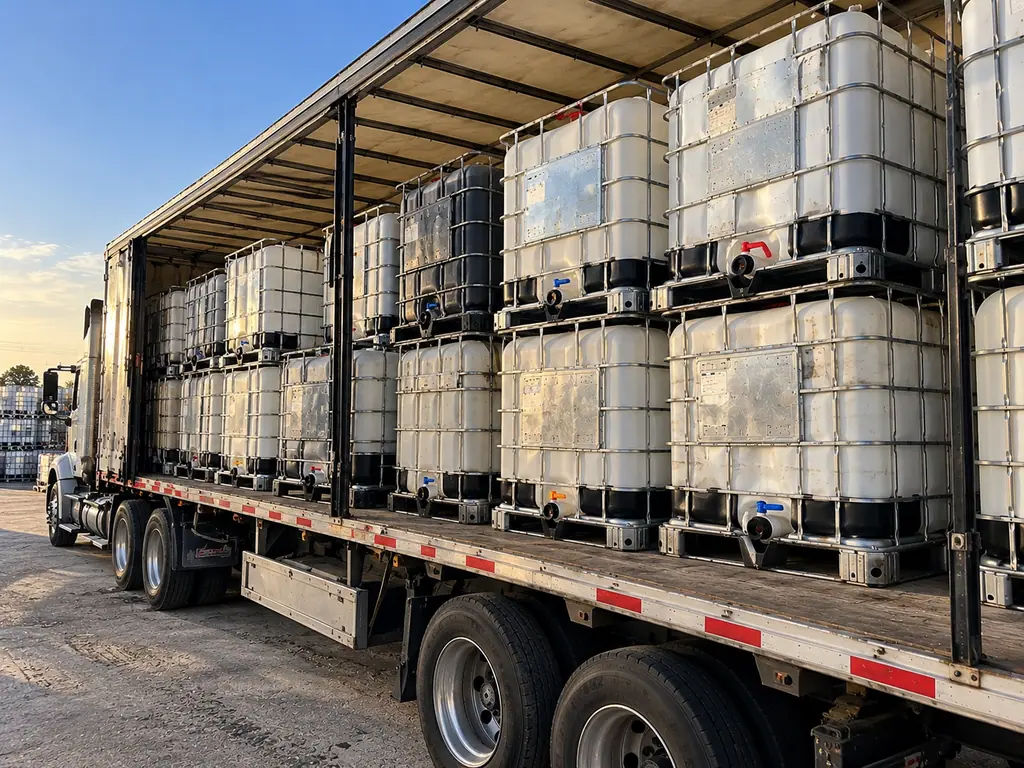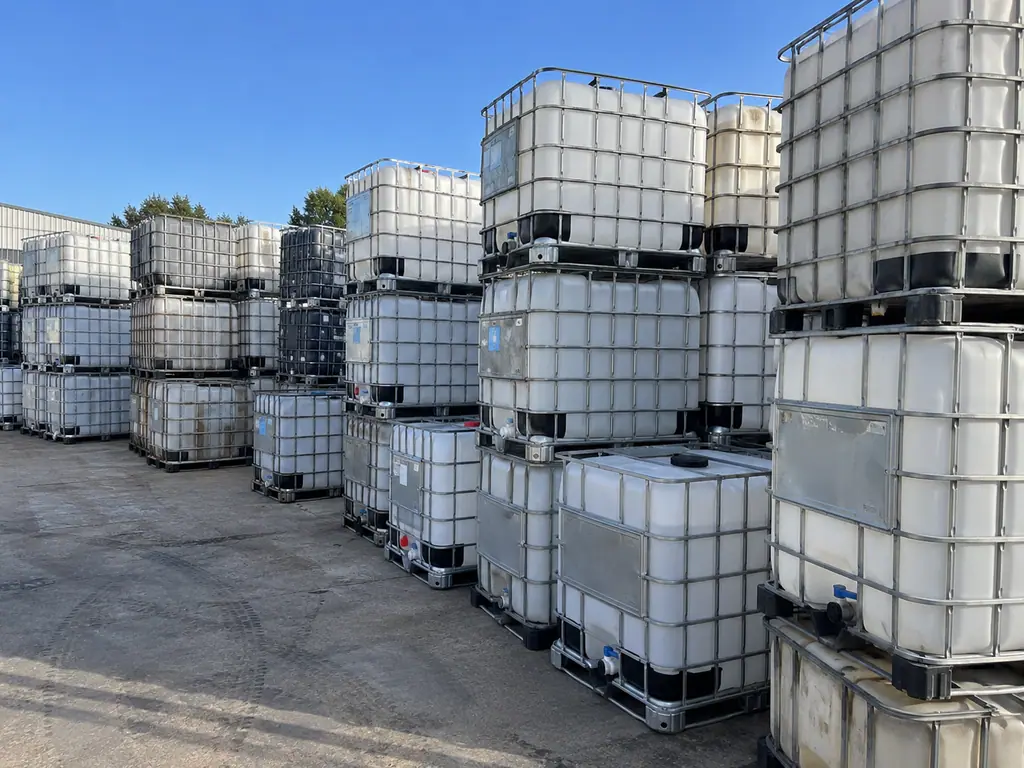
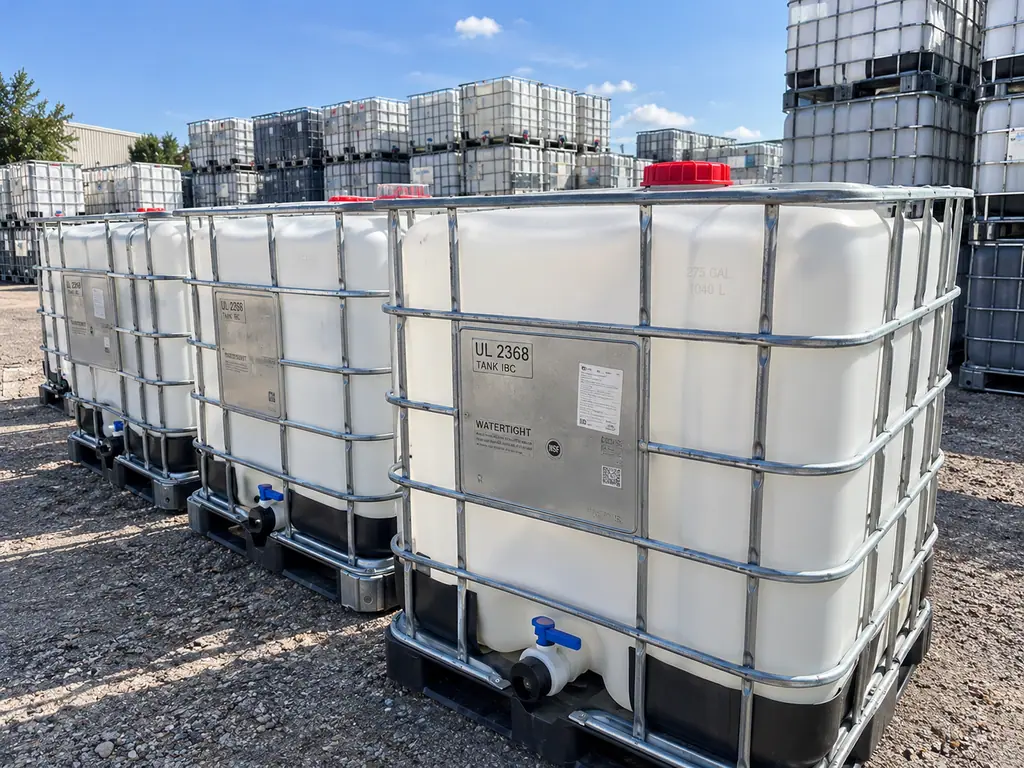
We buy at auction regularly and we lose money on it about one lot in six. That ratio is acceptable because we have a wash line, a repair bay and a regrind contract. If you do not have those, the ratio is much worse, and this article is mostly about why.
What the photographs reliably show
- Cage geometry — a bent frame is visible in any half-decent wide shot.
- Rust at the feet, if the photographer got low enough.
- Bottle clarity and yellowing, under daylight.
- Whether the lot is staged or scattered, which tells you about loading time.
- The presence of lids and valves.
What they never show
- Last contents. The single most valuable fact about a used tote is absent from almost every auction listing, and sellers in liquidation rarely have the paperwork even if they want to help.
- Odour. You cannot photograph absorbed residue. A unit that smells of solvent is worth scrap value and looks identical to one worth four times as much.
- Standing liquid. A photograph taken from above a capped bottle tells you nothing about the two inches of unidentified product in the bottom.
- Whether the gasket is present. A missing outlet gasket is three dollars and a wasted trip if you did not bring one.
- The loading reality. Forklift access, yard surface, whether the gate is actually unlocked at the stated time.
The three costs that eat the margin
Freight is the obvious one, and auction lots are usually priced as if freight were free. A load of forty totes from two states away can easily cost more to move than the hammer price.
Handling is the quiet one. A scattered lot that needs hand-loading turns a two-hour pickup into a six-hour one, and the driver still has to be paid for the other four.
Disposal is the fatal one. If a quarter of the lot is unusable and you have no regrind outlet, you have just bought somebody else's waste-disposal problem at a discount.
Six questions worth sending to the auctioneer
- What did the business do? (It tells you more about contents than any listing.)
- Are the units drained and capped?
- Is there forklift access and will there be an operator?
- What is the removal deadline, and what happens if weather intervenes?
- Can I inspect before bidding, and may I open a fill port?
- Are there safety data sheets available for anything that was stored?
Auctioneers answer these more often than people expect. The answers, or the silence, are worth more than another twenty minutes studying the photographs.
When an auction is genuinely the right move
When the business being liquidated did one thing — a single-product blender, a brewery, a water-treatment contractor — and you can see what that thing was. Single-product sites produce consistent, predictable totes. Mixed industrial sites produce lottery tickets.
And if you would rather skip the lottery: we buy those lots, sort them, and sell you the eleven out of twenty that survived. That is not a sales pitch so much as a description of what the sorting is worth.