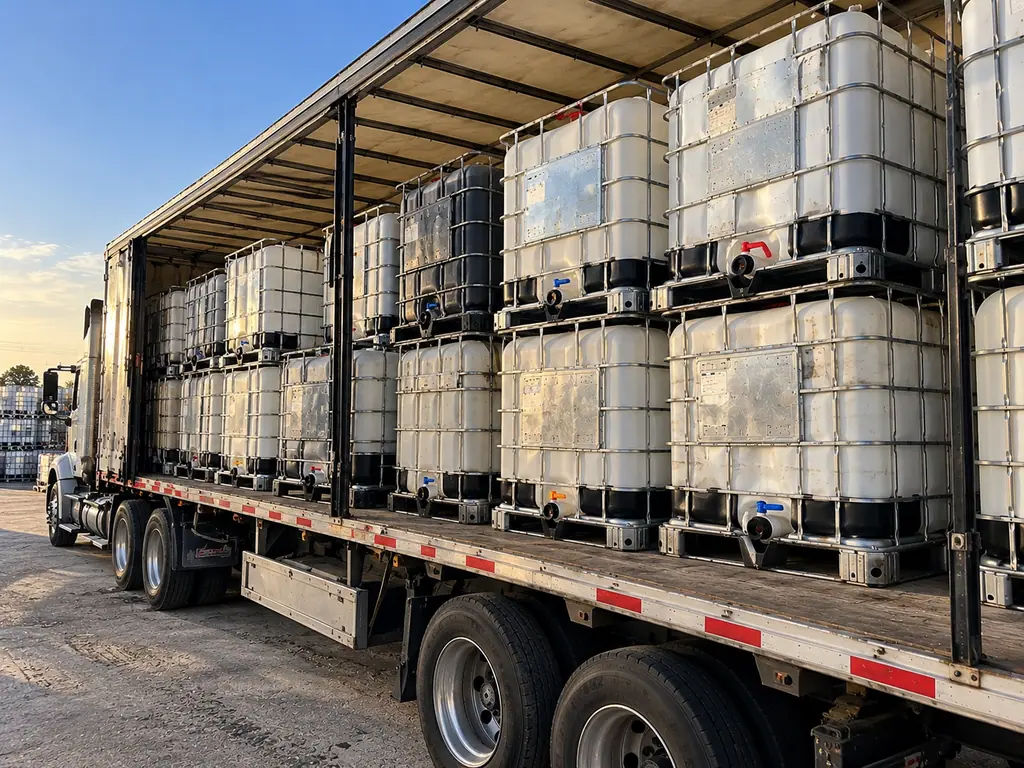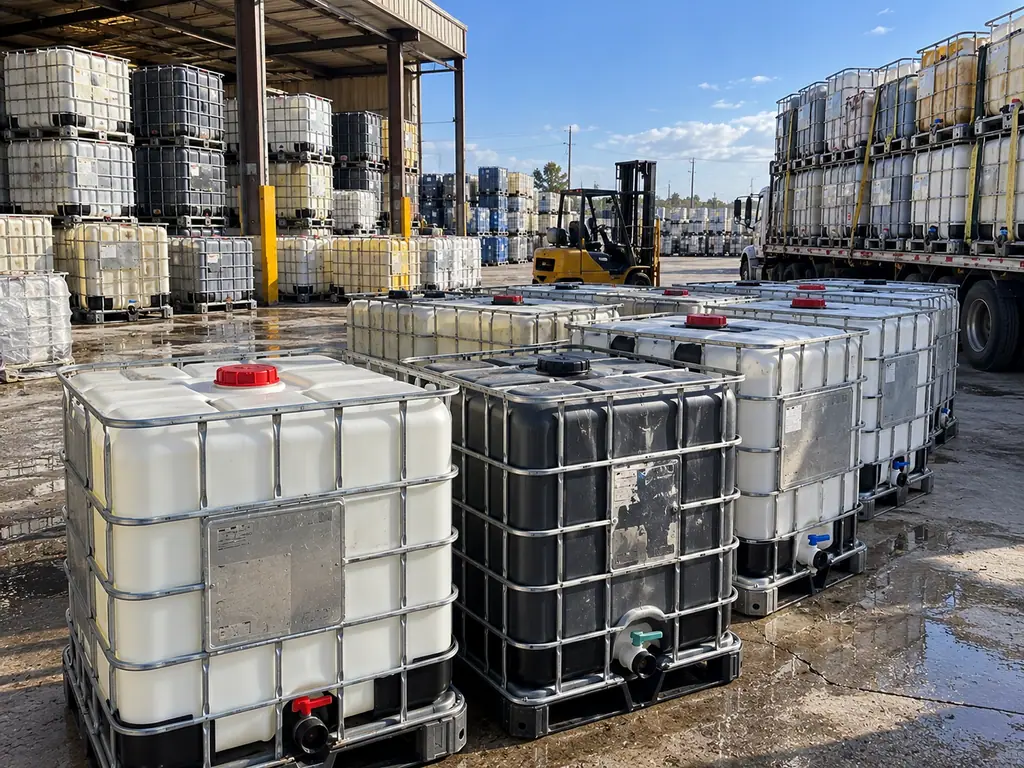
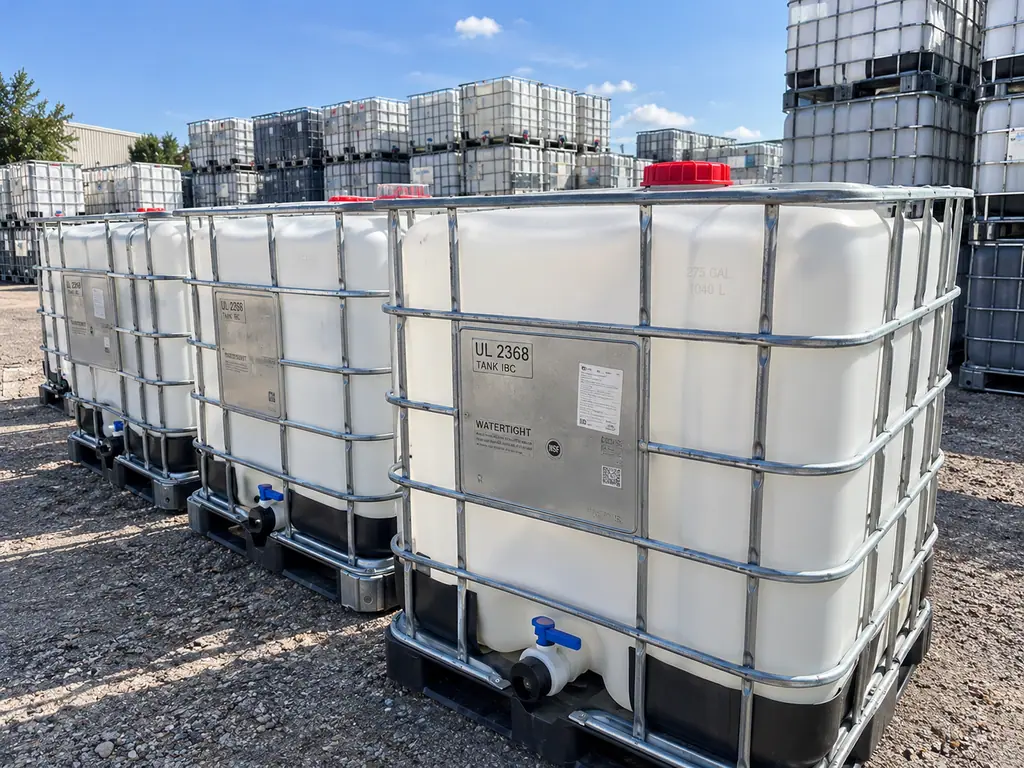
Every month somebody forwards us a quote from a broker offering totes at a price we cannot match, and asks why. The answer is nearly always the same: the cheap quote is priced by the pallet and ours is priced by the grade, and those are two completely different products wearing the same word.
What a pallet price actually buys
A pallet price means somebody has taken whatever arrived that week, stacked it, and put one number on the lot. You will get some excellent units. You will get some that have held something nobody wrote down. You will get at least one with a bottle that has spent four summers facing south.
That is not dishonest in itself — it is a legitimate way to move volume, and for some uses it is exactly right. If you are filling totes with ballast water for a construction site, buy by the pallet and do not think about it again. The trouble starts when a mixed pallet is bought for a job that needed a graded unit.
The arithmetic, with our own intake figures
Across the mixed loads we buy, the distribution is remarkably stable year to year. For every twenty units that arrive without grading:
| Outcome | Units per 20 | What you can do with them |
|---|---|---|
| Washable, sound, documented | 11 | Full service after a wash |
| Sound but undocumented contents | 4 | Non-contact use only, or rebottle |
| Bottle finished, cage sound | 3 | Rebottle, or use the cage alone |
| Cage finished | 1 | Scrap value |
| Genuinely unusable | 1 | Regrind and steel |
So if a pallet of twenty ungraded units costs you $1,600, you did not buy twenty totes at $80. You bought eleven usable totes at about $145 each, plus seven units that need work or a downgrade, plus two you will pay somebody to take away. And you still have to do the washing.
The three costs nobody puts on the quote
- Sorting labour. Somebody at your end has to look inside twenty bottles and make a judgement. That person is usually your most experienced employee and their time is not free.
- Disposal. A unit you cannot use is not worth zero, it is worth negative — unless you can sell it as scrap, which means finding a buyer for a single cage.
- The mistake. One tote used for the wrong thing because its history was unknown costs more than the entire pallet saved. We have seen it happen with a batch of coolant and a food processor's wash line, and it was not a cheap afternoon.
What a graded price includes
When we quote a washed technical tote, the number contains: the intake inspection, the photographs, the last-contents verification, the wash with chemistry matched to those contents, a new valve and gasket, a thirty-minute leak hold, cage repair if it needed it, the grade sheet, and the passport record. It also contains the units we rejected on your behalf, because those were paid for out of the same load.
You are not paying for a tote. You are paying for the eleven out of twenty that survived the triage, and for somebody else having done the triage.
How to compare two quotes honestly
- Ask what percentage of the lot is guaranteed to a stated grade.
- Ask who eats the cost of a unit that fails on arrival.
- Ask whether a wash record exists per unit or per load.
- Ask what the last contents were — and note whether the answer is specific.
- Add your own sorting and disposal time to the cheaper number before comparing.
Do that and the two quotes usually land within a few dollars of each other. At that point buy from whoever answers their email.
A pallet price is an average. Averages are fine until one of the units in the average goes into your product.