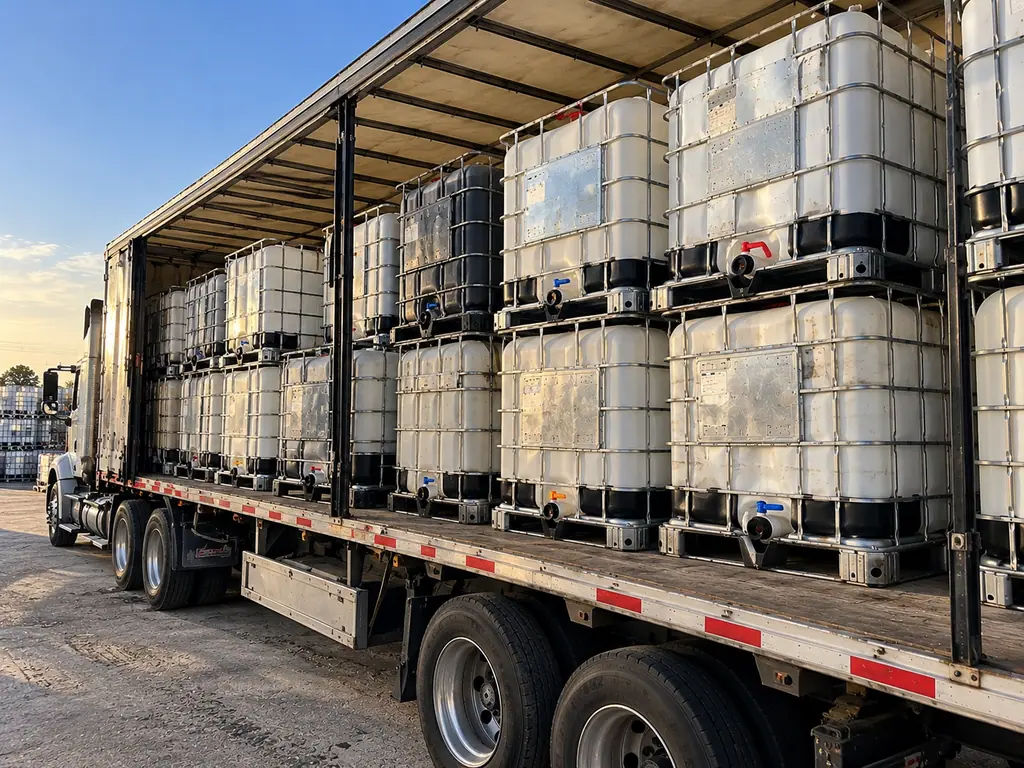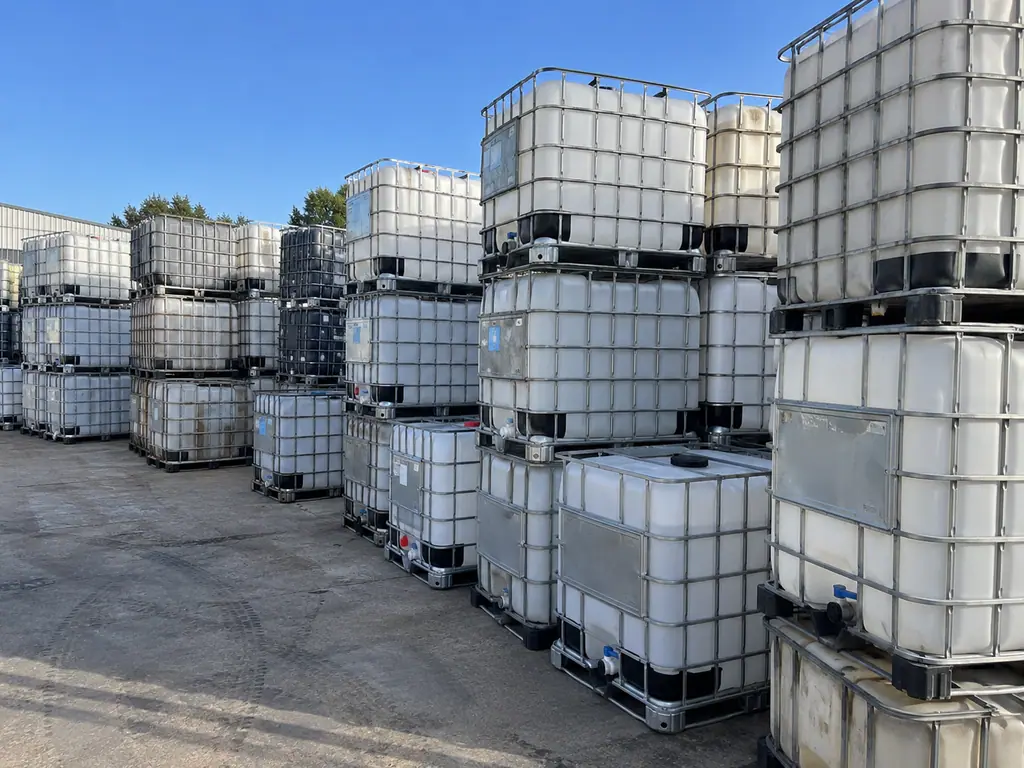
These two formats share a footprint, a fill port, an outlet thread and a handling method. They differ in exactly one meaningful dimension — height — and that single difference quietly decides whether your dock door, your trailer plan and your mixer clearance still work.
The numbers
| 275 gallon | 330 gallon | |
|---|---|---|
| Capacity | 275 gal / 1,040 L | 330 gal / 1,250 L |
| Footprint | 48" × 40" | 48" × 40" |
| Height | 46" – 46.5" | 53" – 59" |
| Tare | 120 – 140 lb | 150 – 185 lb |
| Full, with water | ~2,420 lb | ~2,920 lb |
| Per 48' flatbed | 44 | 40 |
| Gallons per flatbed | 12,100 | 13,200 |
Why the 330 looks obviously better
Twenty percent more product on the same square footage. Nine percent more product per truckload despite carrying four fewer units. Fewer fills, fewer moves, fewer washes per gallon shipped. On paper it wins outright, and per gallon it is usually five to fifteen percent cheaper because the cage and pallet cost is spread over more capacity.
Why it frequently loses anyway
Because of four measurements that people take after the truck arrives rather than before it is dispatched.
- Door and gate height. A 330 on a steel pallet can reach 59 inches. Add the three to six inches of fork height needed to carry it and you need well over five feet of clear opening. We have cancelled loads over this.
- Fill line and agitator clearance. Whatever sits above the fill port in your facility was probably installed around a 46 inch tote.
- Floor rating. 2,920 lb on a 48 by 40 inch footprint is a real point load. Mezzanines, timber floors and older slabs deserve a check.
- Resale liquidity. The used market for 275s is deep and fast. For 330s it is thinner. If you expect to sell the fleet on in three years, that matters.
The decision, in one paragraph
If floor space is your binding constraint and your doors clear 62 inches, buy 330s. If anything in your building was designed around a standard tote, or you handle them outdoors in winter where headspace matters, or you plan to resell — buy 275s. When in doubt, buy 275s: they are the format the rest of the world is built around, and that compatibility is worth more than twenty percent extra capacity.
The mixed-fleet trap
One more thing, learned the expensive way by several of our customers: do not stack across formats. A 330 set on top of a 275 does not land its feet on the lower cage’s load path, and the stack is only as good as that contact. Same format, same pallet type, square on the feet — or do not stack at all.
Full specifications for both are on the 275 gallon and 330 gallon chapters of the size guide.