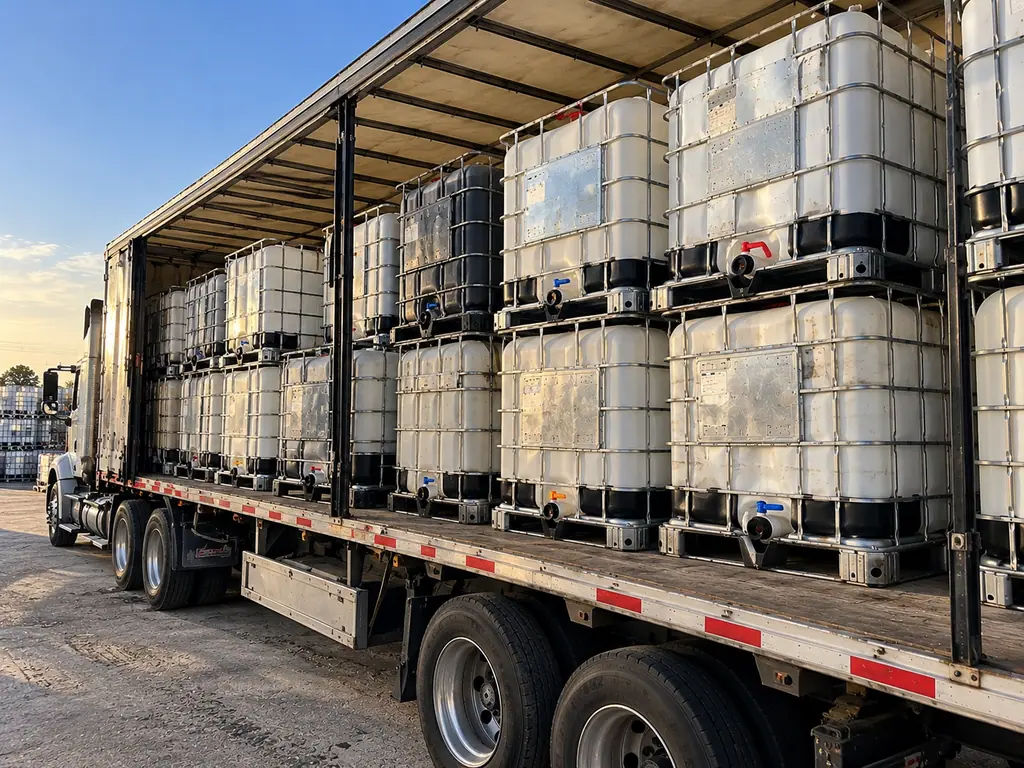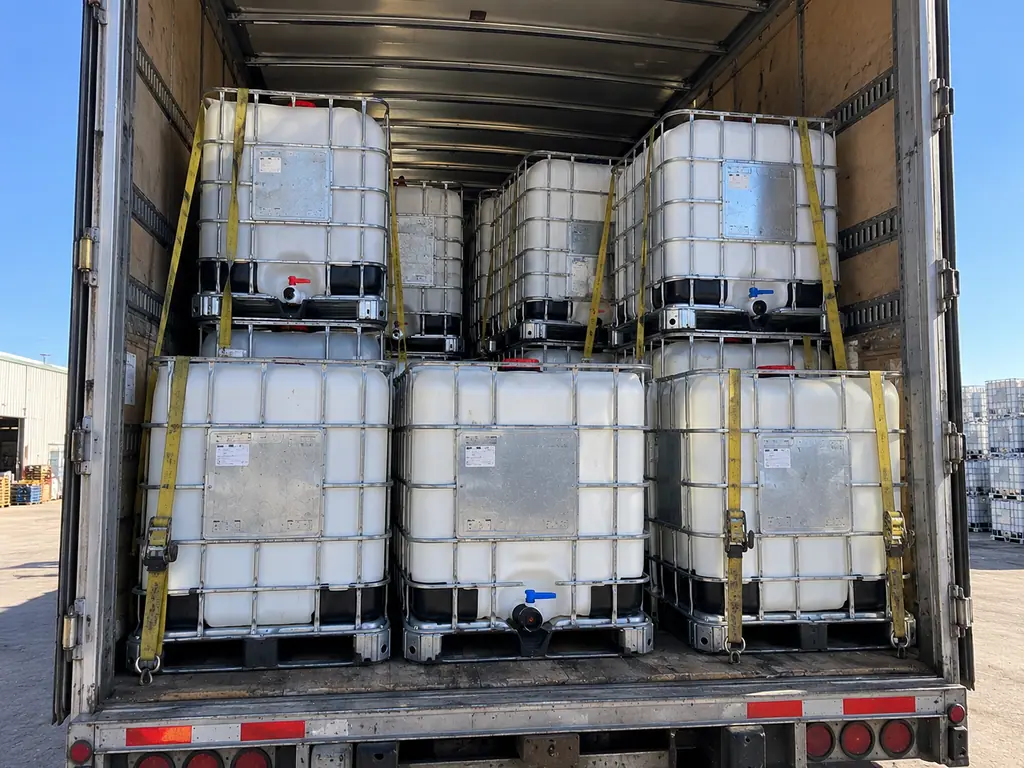
“Food grade” is the most abused phrase in the used-container trade. It is not a certification, it is not a wash, and nobody audits the people who say it. What it actually means — or should mean — is that every documented fill in that bottle’s life was an edible product, and that it was cleaned to a food protocol afterwards.
Here is the check our own intake graders run, in the order they run it. It takes about ninety seconds and you can do all of it in a seller’s yard.
1 · Ask what the last two fills were
Not the last one — the last two. Any seller can recite the most recent product. A seller who actually keeps records can tell you what came before it, and that is the difference between a history and a rinse. If the answer is a shrug, the unit is not food grade at any price.
2 · Put your nose in the fill port
This is the single most informative test available to you and it costs nothing. HDPE absorbs aromatic compounds into the wall of the bottle. A properly washed technical tote smells faintly of warm plastic. A genuine food-grade unit smells of nothing at all. Solvent, perfume, sourness, sweetness — any of those means absorbed residue, and no further washing will remove it.
3 · Look at the inside with a light
Shine a torch through the fill port and look at the far wall and the bottom corners. You are looking for film, staining that follows a liquid line, and crystalline deposits where residue dried. Staining alone is not disqualifying on a technical unit. On a food-grade unit it is.
4 · Check the bottle for UV age
Natural HDPE starts translucent and slightly blue-white. Sunlight turns it yellow, then cloudy, then chalky. Press a thumbnail into the wall near a top corner: if it feels brittle rather than slightly waxy, the bottle is near the end of its life regardless of how clean it is. We grade those down even when they pass every other check.
5 · Read the original label and the cage plate
Most bottles still carry remnants of the original product label, and the cage usually carries a manufacturer plate and sometimes a marking panel. Those tell you what the unit was built for. A cage plate from a chemical packager and a claim of “food grade, always had juice in it” do not sit comfortably together.
6 · Ask for the wash record and read the chemistry
A record should name the stage sequence, the chemistry, the temperature and the hold time. “Pressure washed” is a hose, not a protocol. Food-category washing on our line is steam plus a food-safe detergent at around 190°F for six to ten minutes — deliberately not industrial caustic, which is excellent at cleaning and inappropriate as the final treatment on a food unit.
What to do if it fails
A unit that fails this check is not worthless — it is a washed technical tote, and priced as one it is a perfectly good buy for fertilizer, soap, coolant or non-potable water. The failure mode to avoid is paying a food-grade price for it, or worse, putting something edible in it.
If you need a guaranteed virgin interior, the answer is a rebottled unit — a brand-new HDPE bottle inside a refurbished cage. It satisfies most QA programmes at roughly 60% of the price of new, and it keeps 48 kg of perfectly good steel in service.
Rule of thumb from our intake bay: if you would not drink out of it after reading the paperwork, do not buy it as food grade — no matter how clean it looks.