Bay 1Intake & triage
Every arriving cage is weighed, photographed from six angles, and logged against its last-contents paperwork. Bottles get a light test and a smell check; cages get a weld and foot inspection. Grading happens here and nowhere else.
Floor scale, lightbox, intake terminal
Bay 2Three-stage wash line
Rinse, caustic or steam, rinse — chemistry chosen by last contents, not by habit. Water is filtered and recirculated; the line holds each tote under pressure for thirty minutes before it can pass.
Caustic tank, 190°F steam, recirculation filtration
Bay 3Cage repair & re-footing
Tube straightening, weld repair, foot replacement, re-galvanising touch-up. A bent cage is usually a forty-minute problem, not a scrap ticket.
Hydraulic press, MIG welders, foot jig
Bay 4Rebottling
New HDPE bottles fitted into refurbished cages. This is the bay that cut our scrap rate by a third when it opened in 2015.
Bottle inventory, cage spreader, torque tooling
Bay 5Fabrication
Cutting, plumbing and fitting for upcycled builds: rain harvesters, aquaponics beds, livestock waterers, flood barriers, dock floats. Camlocks, bulkheads, screens and lids in stock.
Hot-air welder, hole saws, fittings wall
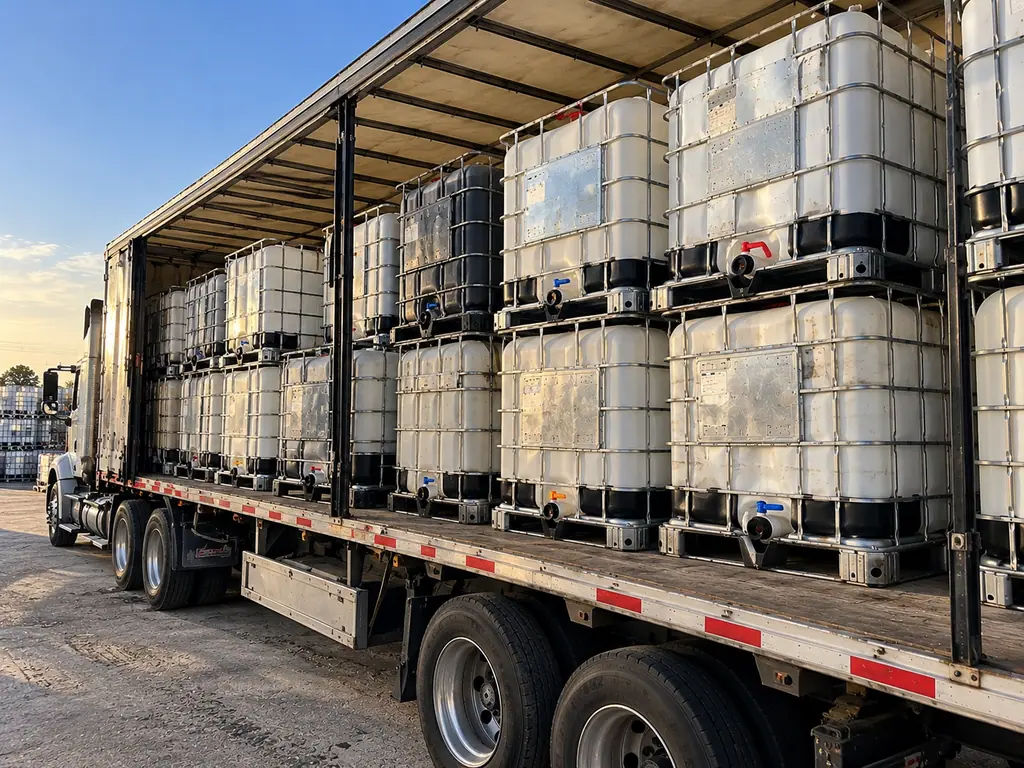
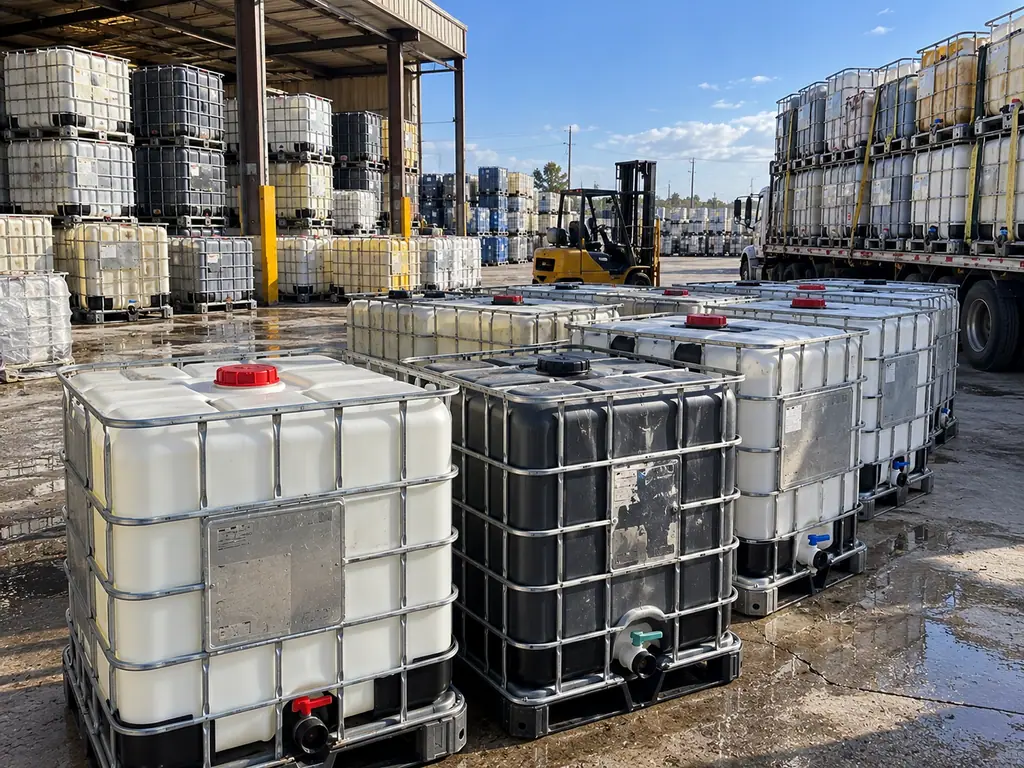
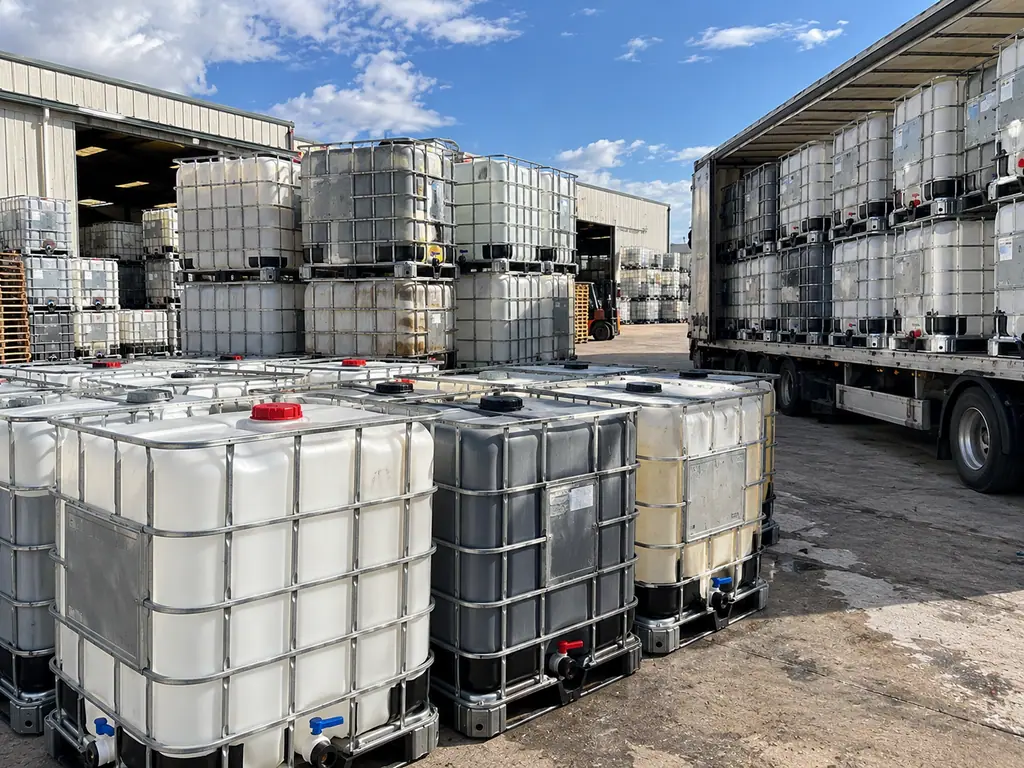
YardGraded staging
Stock is staged by grade, not by arrival date, so a truckload leaves consistent. Double-stacked only on tested cages, never on rebottled stock awaiting cure.
4 acres, two forklifts, one reach truck