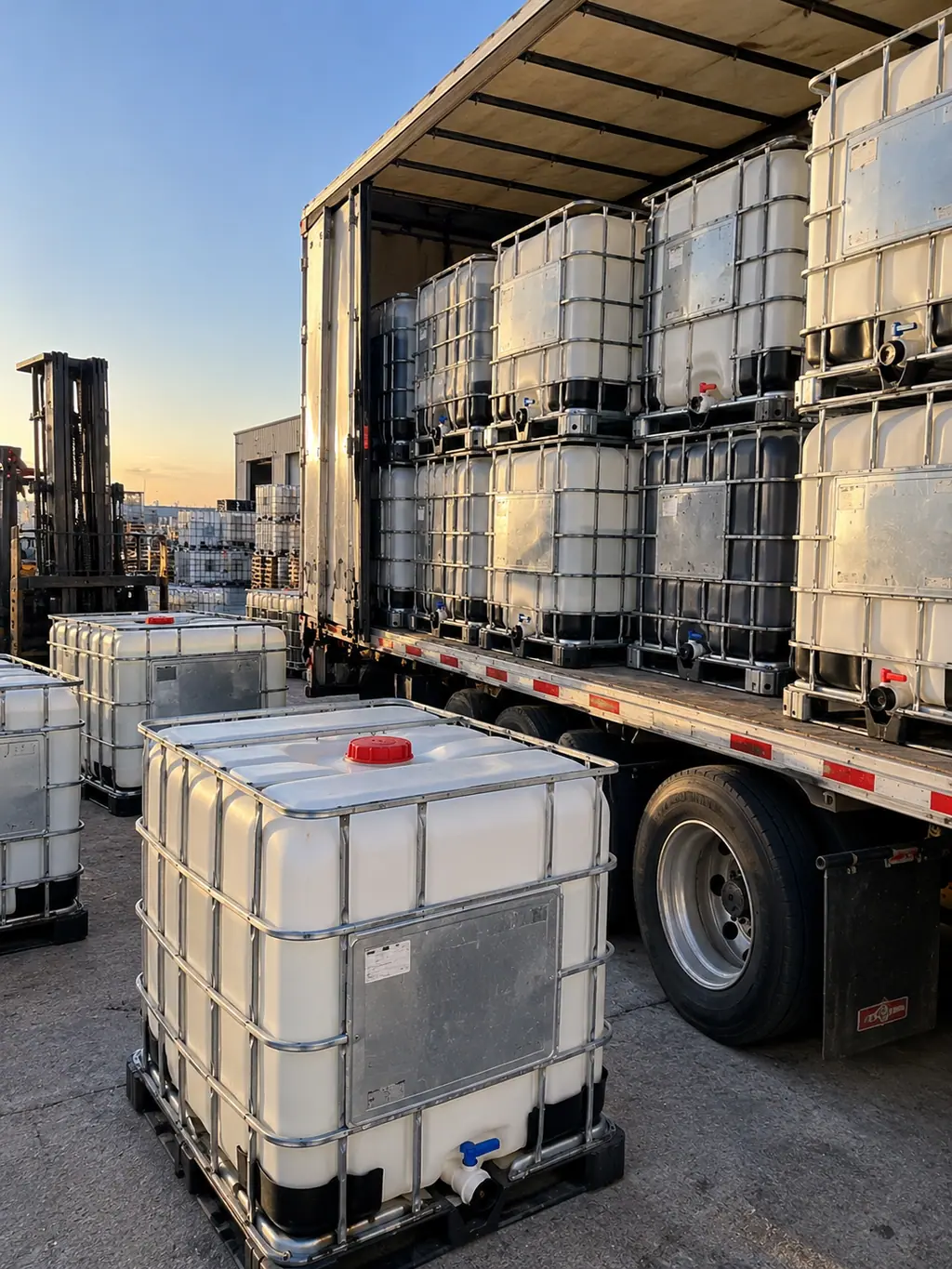
Rebottling & cage repair
The cage is the
asset. The bottle
is the consumable.
Thinking of an IBC as one object is what sends good steel to the scrapyard. Separate the two, and a tired bottle becomes a forty-minute swap instead of a write-off.
Scrap rate cut
33%
when the program opened in 2015
Carbon vs new
−58%
reused steel, new bottle
Typical turnaround
5–10 d
depending on bottle stock
Cage life
15+ yr
with repair, routinely
Rebottling
A virgin interior at a reused-cage price
You get a bottle that has never held anything, inside steel that has already proved it can survive a decade of forklifts.
The process: cage spread on the jig, old bottle removed and routed to regrind, interior frame inspected and repaired, new HDPE bottle seated and torqued, new valve and gasket fitted, leak-held for thirty minutes, re-stencilled and re-graded as Rebottled.
The result satisfies most QA programmes that would otherwise force a new purchase, at roughly 60% of the price and 42% of the embodied carbon.
Cage repair
The 40-second triage
- Bent or bowed tubes — hydraulic press
- Popped or cracked welds — MIG repair
- Missing or rusted feet — replaced on a jig
- Surface rust and galvanising damage — wire-wheeled and zinc-treated
- Deformed pallet bases — straightened or swapped
- Through-rusted tubes you can push a screwdriver into
- Cages twisted out of square beyond press correction
- Anything drilled or cut by a previous owner
- Frames with more than three failed welds in one corner
Those become clean steel scrap. Nothing is landfilled.
Decisions
Repair, rebottle or retire?
A straightforward way to think about it before you call us.
Bottle is clear and sound, cage is bent
Bottle is yellowed, chalky or bulging; cage is straight
Bottle held something we cannot identify; cage is fine
Both are tired
It carries a UN marking
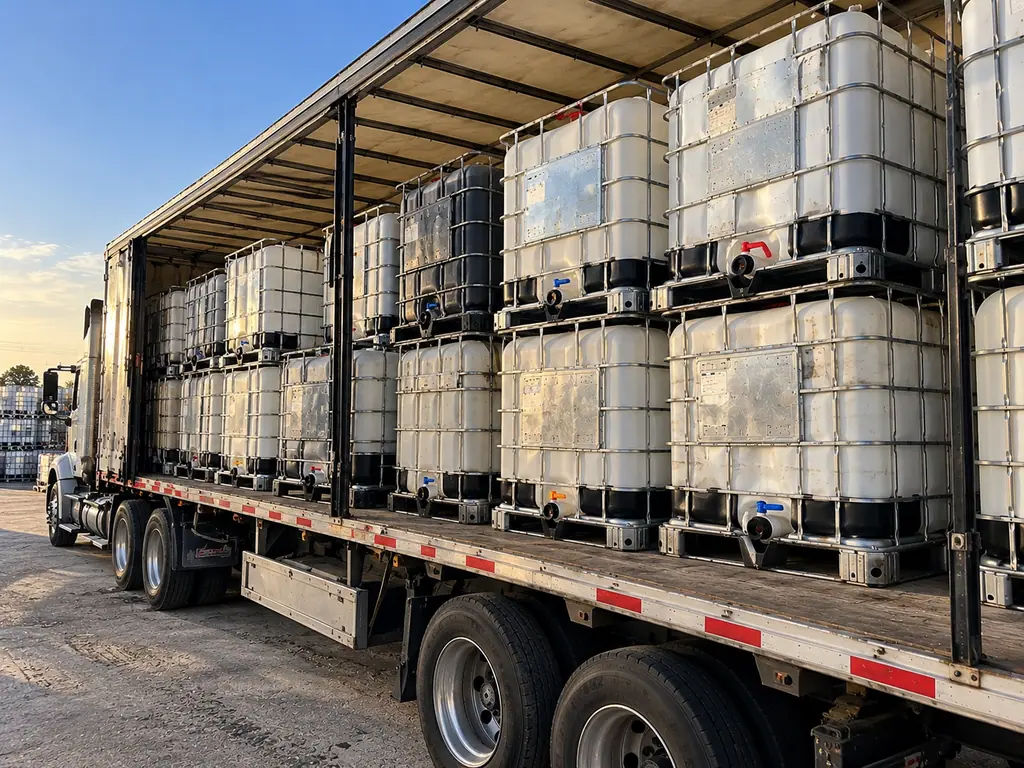
Ready to put a tote back to work?
Send one form. We answer with real numbers — grade, quantity, freight, lead time.