Almost every dispute about a used tote could have been settled in the first five minutes after the truck arrived. After that it becomes a conversation about memory.
Before the driver leaves
- Count. Count against the paperwork, out loud, with the driver. Thirty seconds.
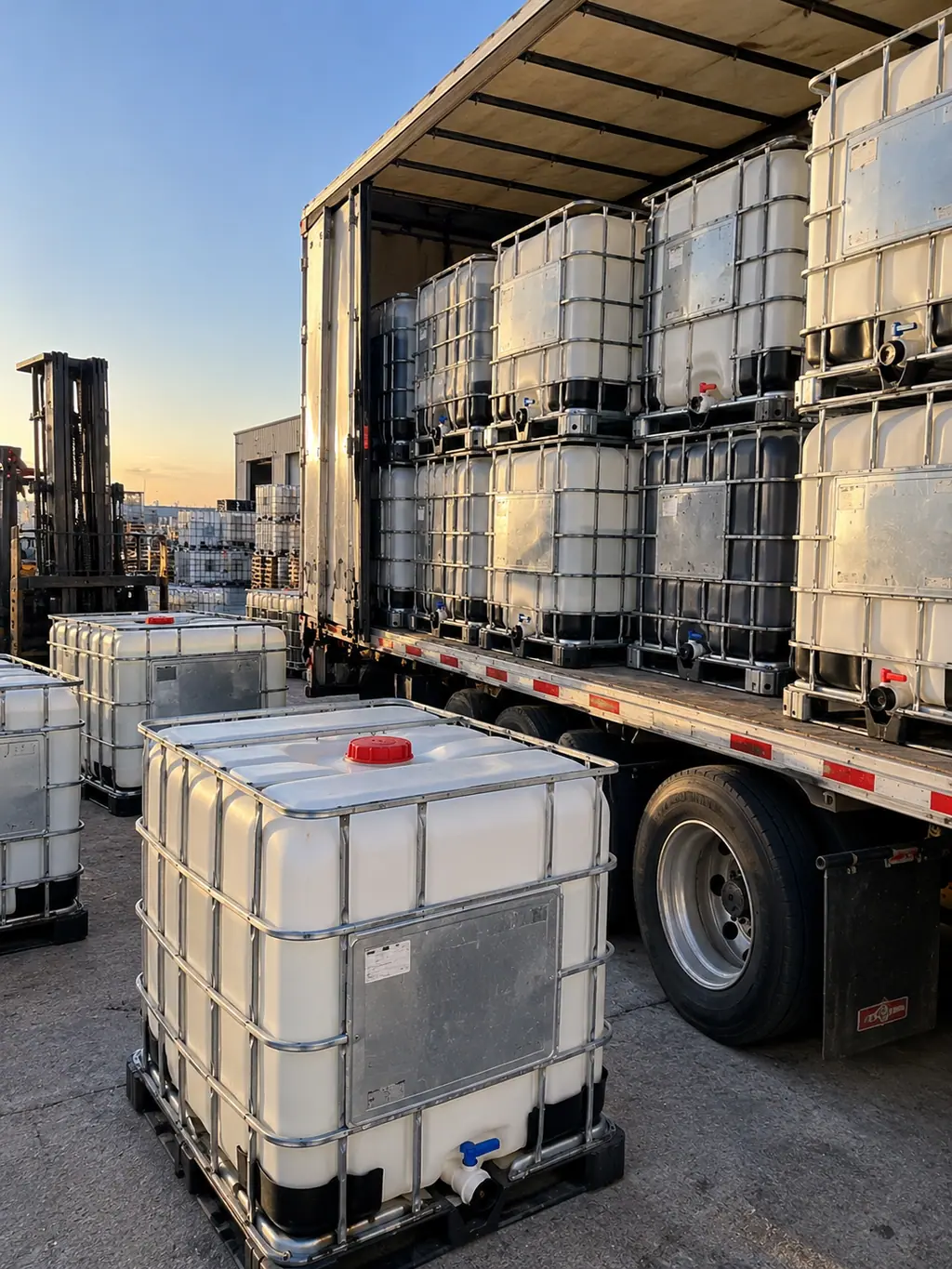
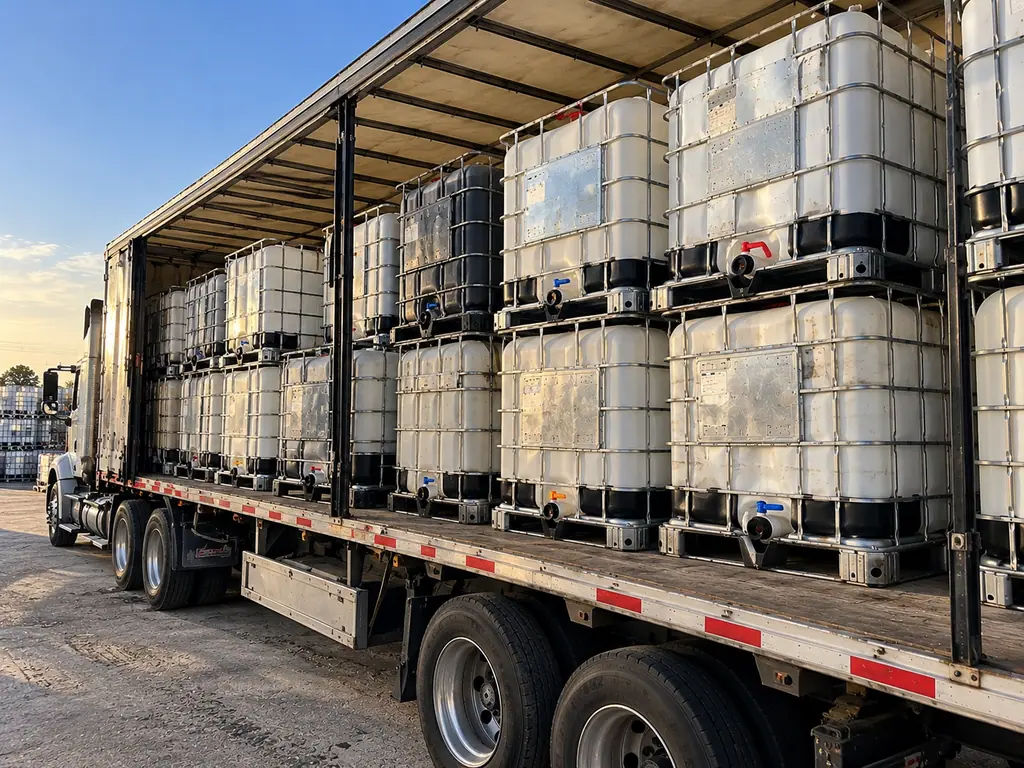
- Photograph the load on the deck before anything is unloaded. One wide shot. This is the single most valuable photograph in any later discussion.
- Walk the long side and look at silhouettes. Any unit leaning or out of square is visible from ten feet.
- Check that valves are capped and lids are present. Missing hardware is easiest to resolve while the truck is still there.
- Sign for the count, and note any visible damage on the paperwork before signing. A clean signature is hard to walk back.
In the first hour
- Open two or three fill ports and use your nose. Odour is the fastest grade check there is.
- Shine a light inside the same units and look at the bottom corners.
- Check the grade sheet against the actual units — our paperwork lists them by cage ID, so you can match them.
- Confirm the base type matches what you ordered, if your handling equipment depends on it.
- Measure one unit if the format matters for clearance. Published heights are ranges.
In the first five days
Our terms give you five business days to raise a discrepancy against the written grade. That window exists because some problems — a seam that weeps under head, a gasket that passes when full — only appear once you fill a unit.
If you intend to put product in them, water-test one or two first. Fill, leave for an hour, look underneath. It costs an hour and it is the only test that finds the failure that matters.
What to send us if something is wrong
- The cage ID from the stencil. It resolves the entire history in one lookup.
- A photograph of the problem and one wide shot of the unit.
- What you expected from the grade sheet.
- Whether the unit has been filled yet.
With those four things we can usually settle it the same day. Replacement, credit or collection — your choice, and return freight is ours if the unit did not match its grade.
What closes the window
Filling a unit is acceptance. Not because we are looking for an excuse, but because once your product is in it nobody can establish whether a problem arrived with the tote or with the fill. That is the one line we hold, and it is in the terms.