The case for reuse
Recycling is what
you do when reuse
has failed.
The waste hierarchy has an order for a reason. Reduce, reuse, recycle — and the gap between the second and third step is far bigger than most sustainability reports admit.
The hierarchy, applied to one object
Four fates for a used tote
Each row costs more carbon than the row above it. We push every cage as far up this table as it can honestly go.
| Fate | What happens | Embodied carbon | Honest verdict |
|---|---|---|---|
| Reuse as-is | Washed, valve replaced, graded, back in service | ≈ 8 kg CO₂e | Best outcome. Roughly 93% of the impact of a new tote avoided. |
| Rebottle | New HDPE bottle dropped into a refurbished cage | ≈ 47 kg CO₂e | Excellent when the bottle is tired but the steel is sound. |
| Recycle | Bottle granulated into regrind, cage re-melted | ≈ 78 kg CO₂e | A good last resort. Still far better than landfill. |
| Landfill | 150 lb of engineered material buried | ≈ 112 kg CO₂e wasted | Indefensible. We treat this as a failure, not an option. |
Three arguments, in order of strength
Cheaper, cleaner, and usually faster
Reuse avoids manufacturing entirely
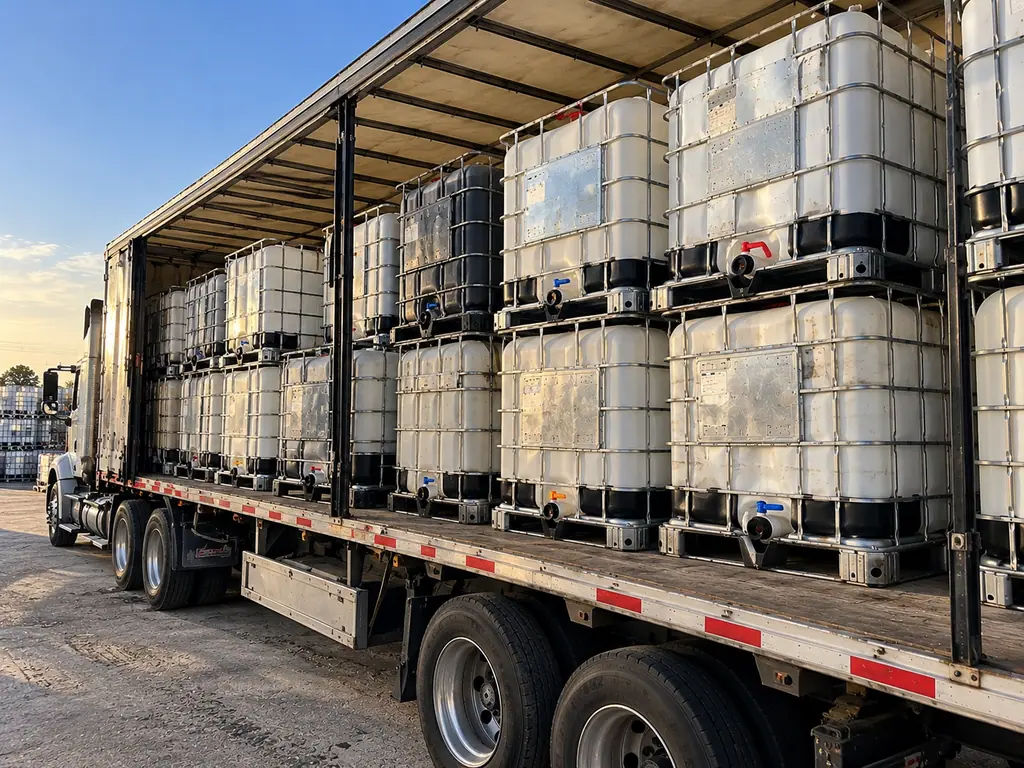
A new tote means ~20 kg of virgin HDPE and ~48 kg of new steel formed, galvanised, assembled and shipped. Washing an existing one means heat, detergent and about 42 litres of recirculated water.
40–70% below new, for the same job
If you are storing non-potable water, mixing fertilizer or collecting waste coolant, a reconditioned cage does the identical work. Paying new prices for that is a procurement habit, not a requirement.
In stock beats on order
New totes arrive on a factory schedule. Our yard has hundreds of graded cages on the ground right now, and our own trucks on the lanes that matter.
CO₂e avoided
3,066 kg
Virgin HDPE not made
492 kg
Steel kept in service
1,152 kg
Landfill volume spared
1,104 ft³
- Roughly the annual uptake of 146 mature trees.
- About 0.7 average US cars taken off the road for a year.
- Our wash line uses about 1,008 L for that many totes — already netted out above.
Estimates, openly stated: 20.5 kg HDPE per 275-gal bottle, 48 kg steel per cage and pallet, 1.9 kg CO₂e per kg virgin HDPE and 1.85 per kg virgin steel (cradle-to-gate literature values). Freight is excluded because it depends on your lane — we quote it separately. Full working is on the carbon math page.
Where we argue against ourselves
When a new tote is the right call
A reuse yard that claims reuse is always correct is selling, not advising.
Pharmaceutical, cosmetic or infant-food contact
Highly regulated hazmat with a fresh UN requirement
Aggressive solvents and permeation risk
Colour-matched or branded fleets
Put a number on your reuse case.
Tell us what you store and how many you need. We will quote reconditioned, rebottled and new side by side so the comparison is yours to make.