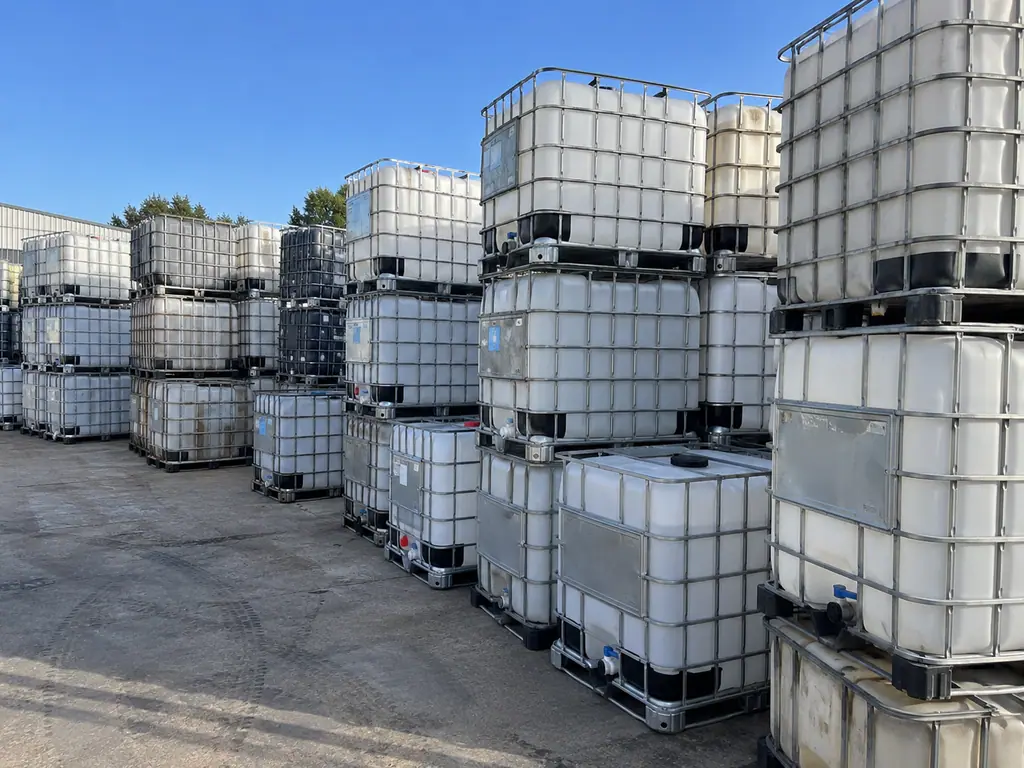
Reconditioning & washing
Washing is
chemistry,
not pressure.
Anyone can blast a bottle with 3,000 psi and make it look clean. Getting residue out of HDPE requires the right chemistry at the right temperature for the right hold time — and a record proving it happened.
The line
Three stages, chemistry matched to contents
The stage sequence never changes. The chemistry in stage two is chosen per unit from the last-contents record — which is the entire reason we insist on having one.
| Stage | What happens | Typical parameters | Why |
|---|---|---|---|
| 1 · Pre-rinse | Ambient water flood and drain, valve removed | 60–90 s, 40 psi | Removes bulk residue before it can be baked on by heat |
| 2a · Caustic wash | Hot caustic recirculated through the bottle | 140–160°F, 2–4% solution, 8–12 min | Industrial residues, oils, surfactants, adhesives |
| 2b · Steam & detergent | Live steam plus food-safe detergent | 190°F, 6–10 min | Food-grade units — effective without industrial caustic |
| 2c · High-pressure rinse | Rotating head, cold water | 2,000 psi, 3–5 min | Light-duty jobs: water, brine, fertilizer |
| 3 · Final rinse & dry | Clean water rinse, drain, forced-air dry | Until clear, then 20+ min dry | No standing water means no microbial growth in storage |
| 4 · Leak hold | Reassembled, filled and held under pressure | 30 min | A weeping seam shows up here, not at your facility |
Toll washing
Send us your own totes
If you own a fleet, we will wash it and give it back graded and documented. Common for growers, distributors, breweries and chemical blenders with a returnable programme.
- Per-unit pricing, with breaks at 20, 50 and 100 units
- Three to seven working days depending on chemistry
- Valve and gasket replacement at cost if yours are tired
- Your asset numbers re-stencilled, or ours applied
- Wash record issued per unit, not per load
- We will flag and quote any cage repair we find instead of just washing around it
Closed loop since 2024
Wash water is filtered, settled and recirculated before treatment and discharge under our municipal permit. Fresh draw is about 42 litres per tote — roughly 60% less than before the retrofit, and about a quarter of what it takes to make the resin for one new bottle.
What we will not wash
- Unknown contents with unidentifiable residue
- Bottles that held permeating solvents
- Anything with a pesticide label we cannot verify as rinsate-cleared
- Units whose bottle wall has gone chalky and brittle
Those go to regrind. It is a smaller cheque for everyone and the only honest outcome.
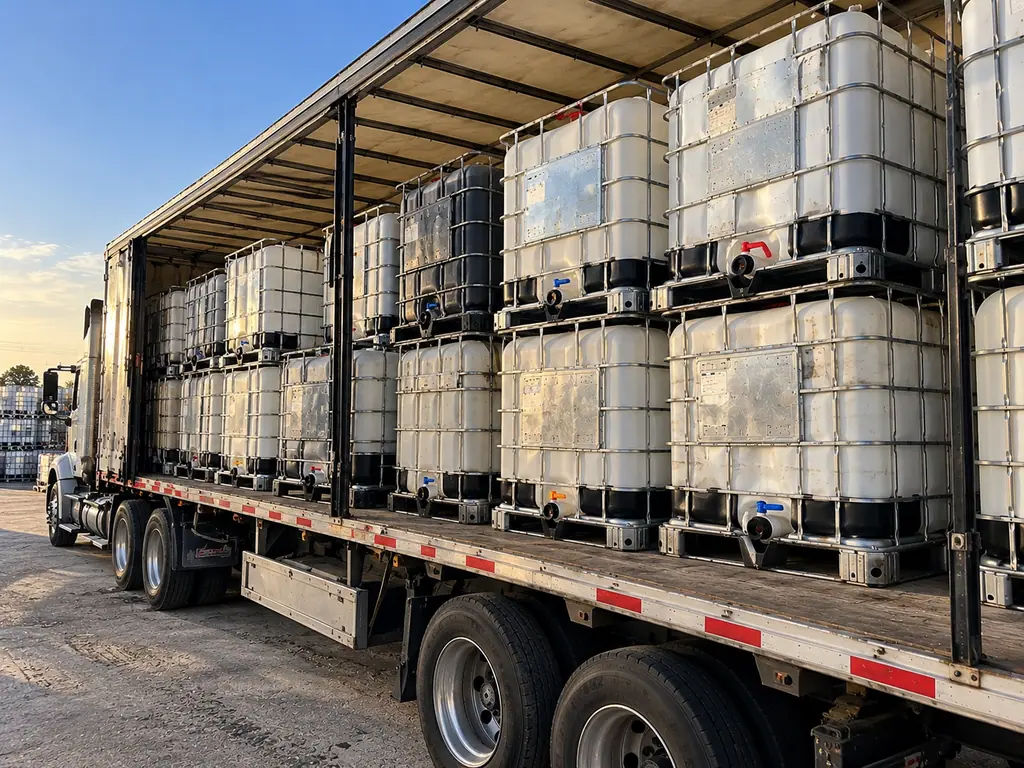
Fleet looking tired?
Tell us how many and what they held. We will quote the chemistry, the turnaround and any repairs we expect to find.