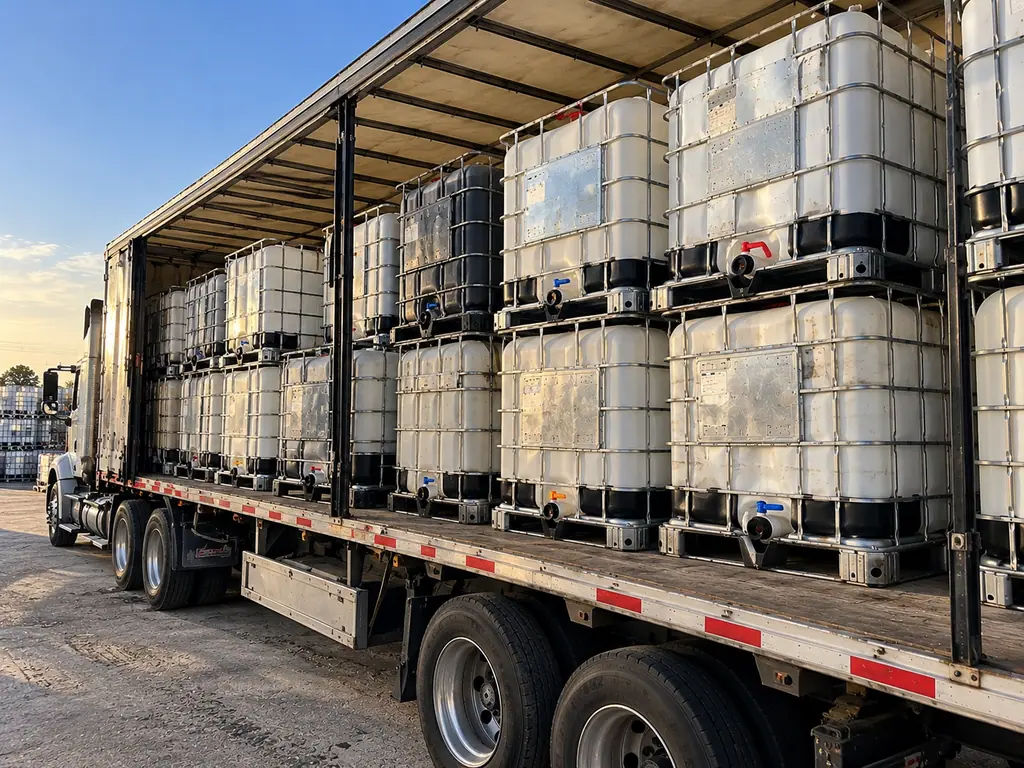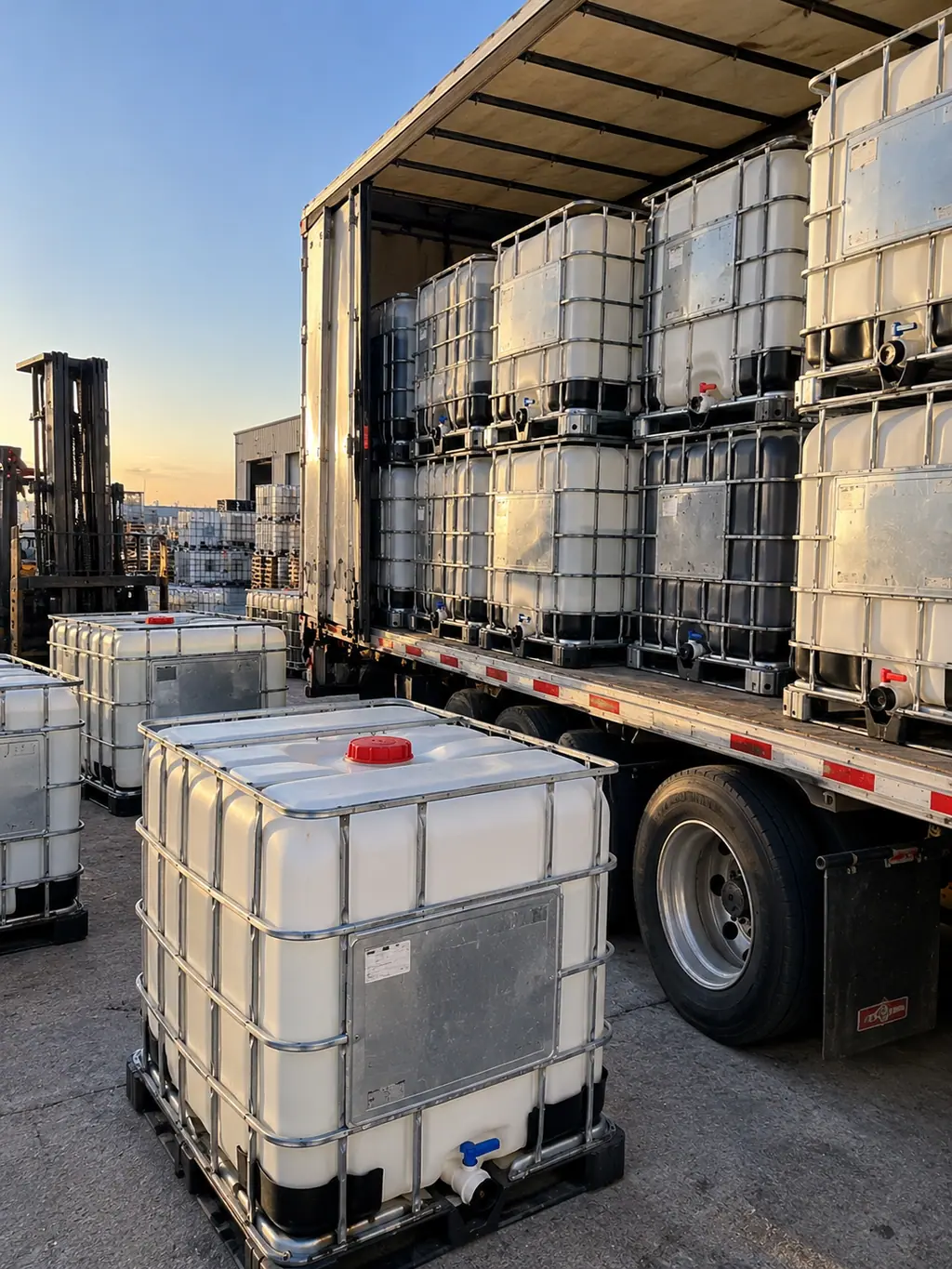
“How long does an IBC tote last?” is the question we get most and answer worst, because the honest answer is a distribution rather than a number. So here is the distribution, from our own passport records.
What we tracked
Since 2016 every cage leaving our yard has carried a stencilled passport ID and a file: build year, bottle changes, wash chemistry, repairs, loop count. That gives us roughly a decade of service histories on a population we see repeatedly — because a large share of what we sell eventually comes back to us.
The headline numbers
| Metric | Value | Note |
|---|---|---|
| Mean loops per cage | 5.8 | A 'loop' is one fill-to-return cycle through our yard |
| Median cage service life | 11 years | From manufacture to scrap verdict |
| Longest-serving cage in our records | 19 years | Four bottles, two foot replacements |
| Mean bottles per cage | 1.9 | The bottle is the consumable |
| Bottles reaching regrind on first return | 6% | Usually unknown contents or UV damage |
| Cages scrapped on first return | 2% | Almost always through-rust or prior modification |
The two components age completely differently
A galvanised steel cage is remarkably durable. Its enemies are rust at the feet, forklift impact and previous owners with drills. Kept off standing water and handled by people who aim, a cage lasts fifteen years without drama.
An HDPE bottle is a consumable with three enemies: sunlight, sustained stack load and aggressive contents. Indoors, single-stacked, holding something benign, a bottle will outlive its cage. Outdoors in full sun it is finished in four to six summers regardless of how carefully you treat it.
What shortens life most, in order
- UV exposure. By a wide margin the largest factor. Covering a bottle roughly doubles its life and costs almost nothing.
- Freeze cycles while full. Each one deforms the bottle a little more and the cage with it.
- Sustained double-stacking while filled. HDPE creeps; the bulge at the shoulders is a thinned wall.
- Standing water around the feet. The cage’s most common cause of death.
- Aggressive or unidentified contents. Not a wear problem but a disqualification — it ends resale value instantly.
What this means for a purchase decision
If you are buying reconditioned, you are not buying a shorter life — you are buying a cage that has already demonstrated it survives, with a bottle graded on its remaining life. A fifteen-year-old cage that passes our triage is a better bet than an unknown new one, because it has been tested by reality rather than by a sample drop test.
And if the bottle is the part that wears out, then rebottling — not replacement — is the natural maintenance action for a tote fleet. That reframing is the single most useful thing in this article.
You can look up the passport record format on the Tote Passport page.