We buy totes every week, and the difference between a top-band price and a mid-band price is almost never the condition of the totes. It is the quality of the information that arrives with them. Here is how to get the best number, written by the people who will pay it.
1 · Find out what was actually in them
This is worth more than anything else on this list. A documented last-contents record — ideally with a safety data sheet for anything that is not food, water or a common agricultural or cleaning product — is the single difference between a bottle we can wash and resell and a bottle that goes to regrind. The gap between those two outcomes is most of the value.
2 · Drain them properly, but do not wash them
Drain as completely as you can and cap the valve. Please do not pressure-wash them in your parking lot — you will create a discharge problem for yourself and you will not improve our wash outcome. We have a line; you have pavement.
3 · Photograph four angles per pallet
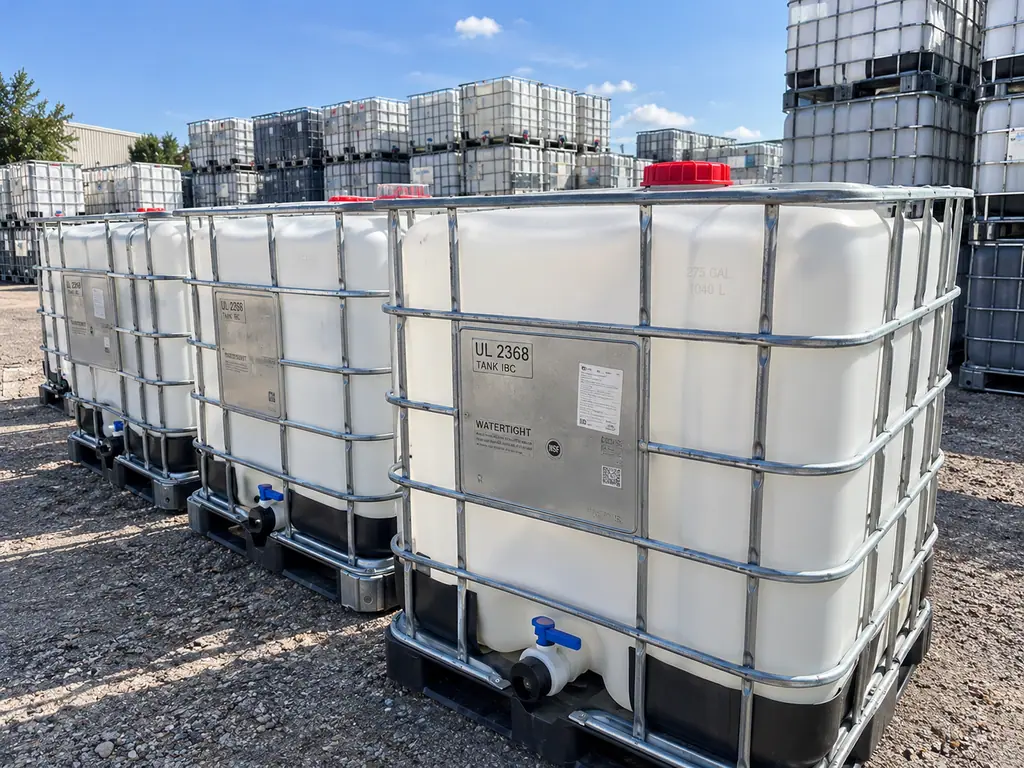
Not every unit — four angles of each staged group is plenty: a wide shot showing the stack, one showing cage feet and the lower frame, one down into the fill port with a light, and one of the marking panel or manufacturer plate. That set is usually enough for us to quote firm.
4 · Count accurately, by format
“About forty” becomes a conservative quote. “Thirty-one 275s on steel pallets and nine 330s on composite” becomes an aggressive one. Format and pallet type change both the value and the load plan.
5 · Stage them before the truck comes
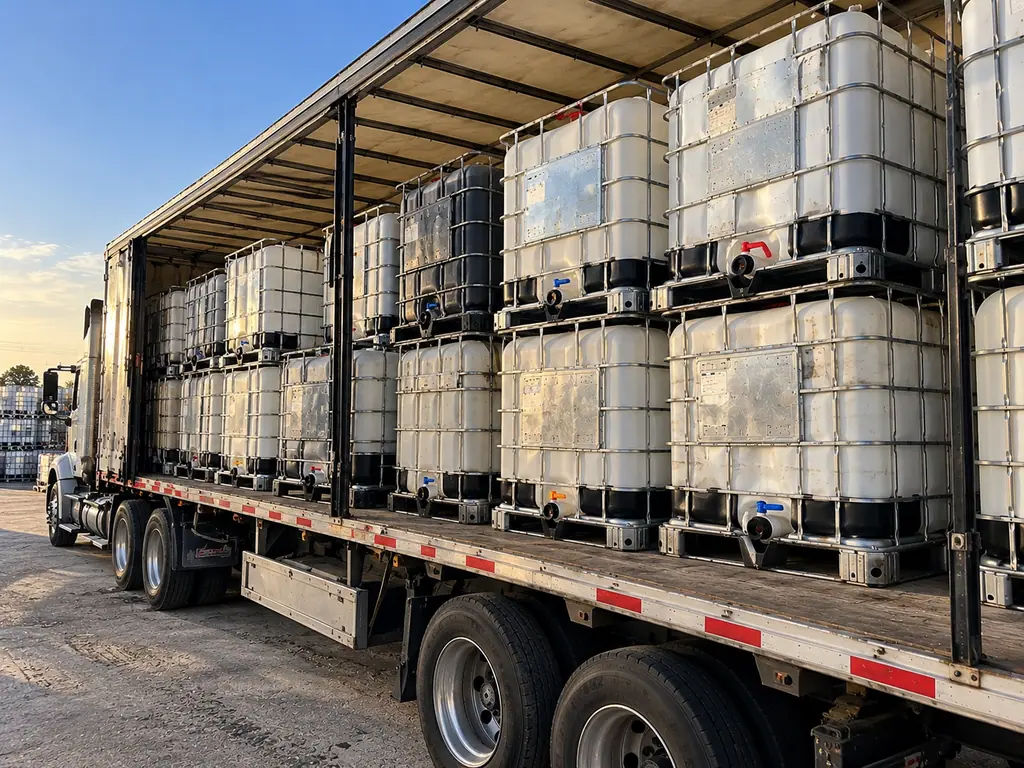
Together, on level ground, with forklift access, lids on, valves capped. A load the driver can take in forty minutes is worth more than the same load scattered across a yard, because we price the labour either way.
6 · Disclose the bad ones
Tell us about the three cracked bottles and the two rusted cages. We will still buy them at scrap value, and declaring them up front keeps your quote firm. Burying them in the middle of a load is the fastest way to turn a clean transaction into a re-negotiation on your pavement.
7 · Ask what happens next
A legitimate buyer can tell you the destination of every component — bottle, cage, pallet, valve, gasket. If the answer is vague, your totes may simply be moving to somebody else’s problem. Ours is on the ecology page, with the mass balance.
What quietly kills your price
| Issue | Effect | Fixable before pickup? |
|---|---|---|
| Unknown last contents | Drops to scrap band | Yes — find the paperwork |
| Residue left standing | Wash category escalates | Yes — drain fully |
| Missing lids and valves | Small deduction per unit | Yes — they are usually on site somewhere |
| Years in direct sunlight | Bottle graded down | No |
| Cut or drilled bottles | Scrap only | No |
| Scattered, unstaged units | Labour deduction | Yes — stage them |
What we pay for
Everything, in practice. Clean documented food-grade cages in volume are worth real money. A rusted cage with a cracked bottle is worth the scrap value of its steel and resin — which is still a cheque rather than a disposal invoice. See the buyback page for the bands, or the scrap price sheet for the bottom end.