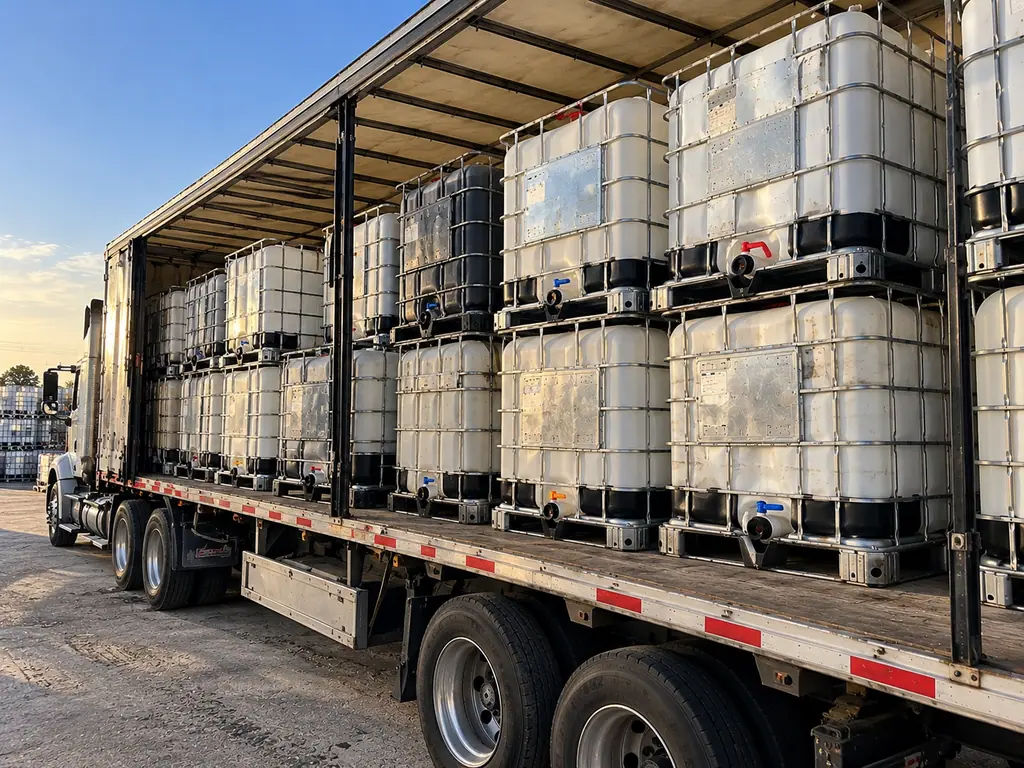
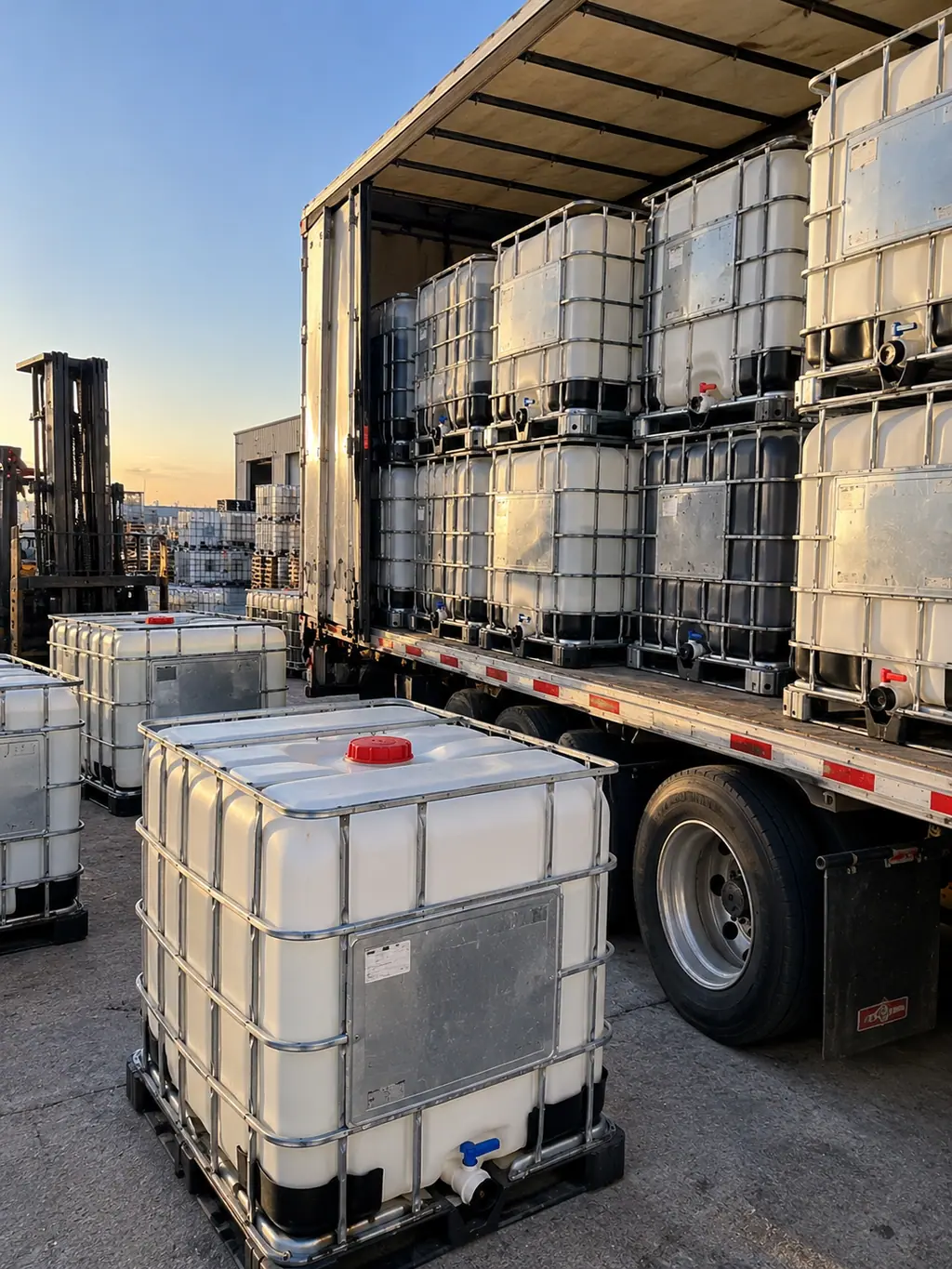
Tare weights for IBC totes are published as ranges — 120 to 140 lb for a 275 on a steel pallet is the usual figure. We wanted to know what the distribution actually looked like, so we weighed everything for twelve months.
What the distribution looked like
| Format and base | Published range | What we actually measured | Spread |
|---|---|---|---|
| 275 gal, steel pallet | 120–140 lb | 118–147 lb, median 131 | 29 lb |
| 275 gal, composite | 120–135 lb | 112–134 lb, median 123 | 22 lb |
| 275 gal, plastic | 115–130 lb | 108–127 lb, median 118 | 19 lb |
| 330 gal, steel | 150–185 lb | 149–191 lb, median 168 | 42 lb |
The spread is wider than published, which is unsurprising. The useful finding was what correlated with the outliers.
Finding one: heavy units are usually wet
A 275 arriving at 147 lb is almost never a heavier cage. It is a cage with two or three gallons of product still in the bottom of the bottle. Weight at intake turned out to be a better residue detector than looking through the fill port, because residue pools in the corners where you cannot see it.
We now flag anything more than 12 lb above the median for its format, and about four out of five of those have standing liquid.
Finding two: light units are usually old
Unusually light cages tend to be older stock where the manufacturer used thinner tube, or where the bottle itself has been through a thermal history that lost it a little mass. Light and clear is fine. Light and yellowed is a bottle near the end.
Finding three: freight was being quoted wrong
We had been quoting empty-load weight using the midpoint of the published range. The measured median was higher for steel-pallet 275s, which meant a 44-unit load was about 480 lb heavier than we had been telling carriers. Not enough to matter legally, but enough to matter on fuel.
Finding four: scrap value became calculable
Once you know the real weight distribution, you can split a scrap load into resin and steel by arithmetic rather than by sorting. A 275 with a cracked bottle is 20.5 kg of HDPE and 48 kg of steel, and the scale confirms which units deviate.
What we would tell someone copying this
Weigh at intake, not at despatch. The information is about what arrived, and by despatch you have already changed it. And record the base type with the weight — without that column the data is noise.