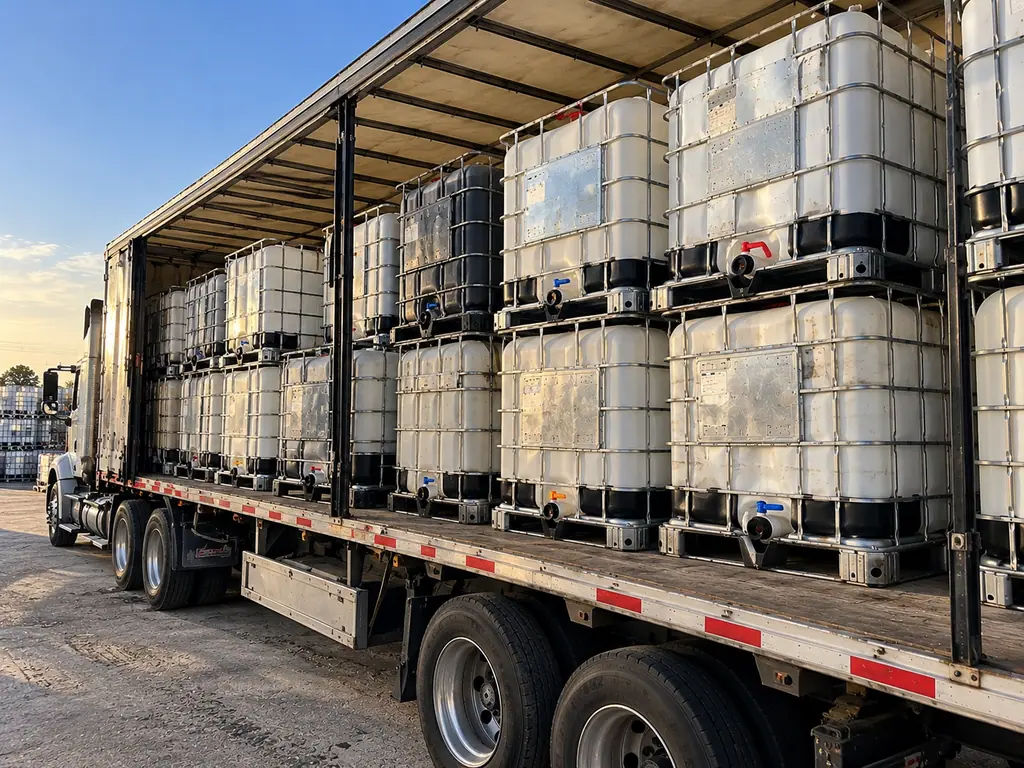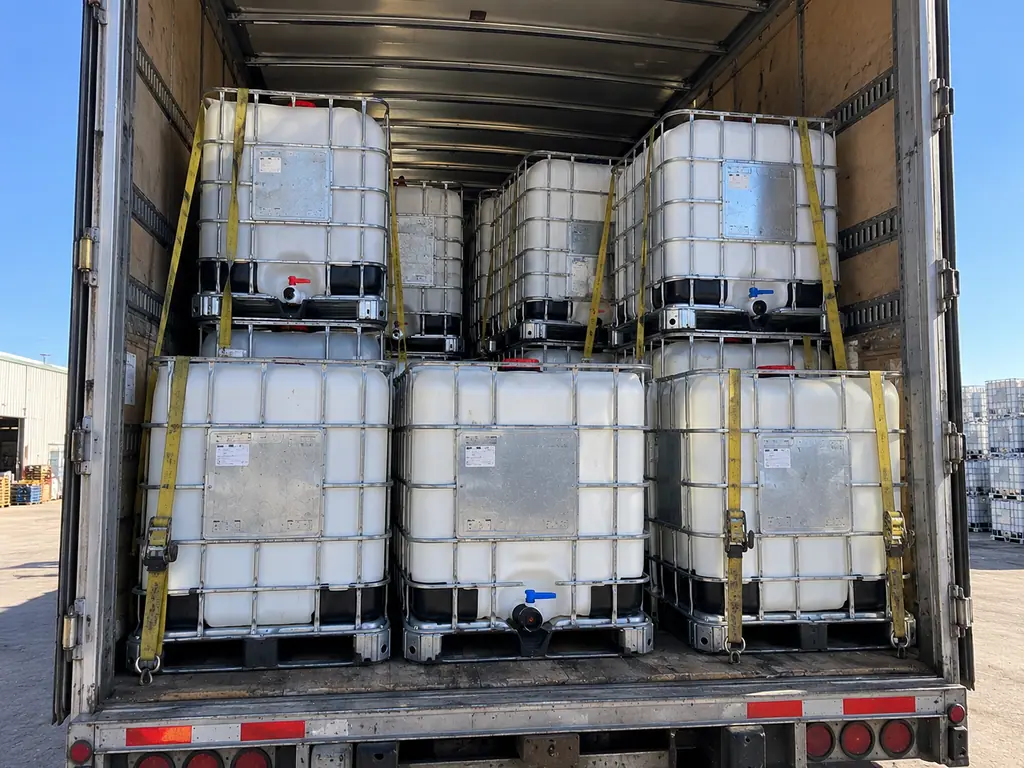
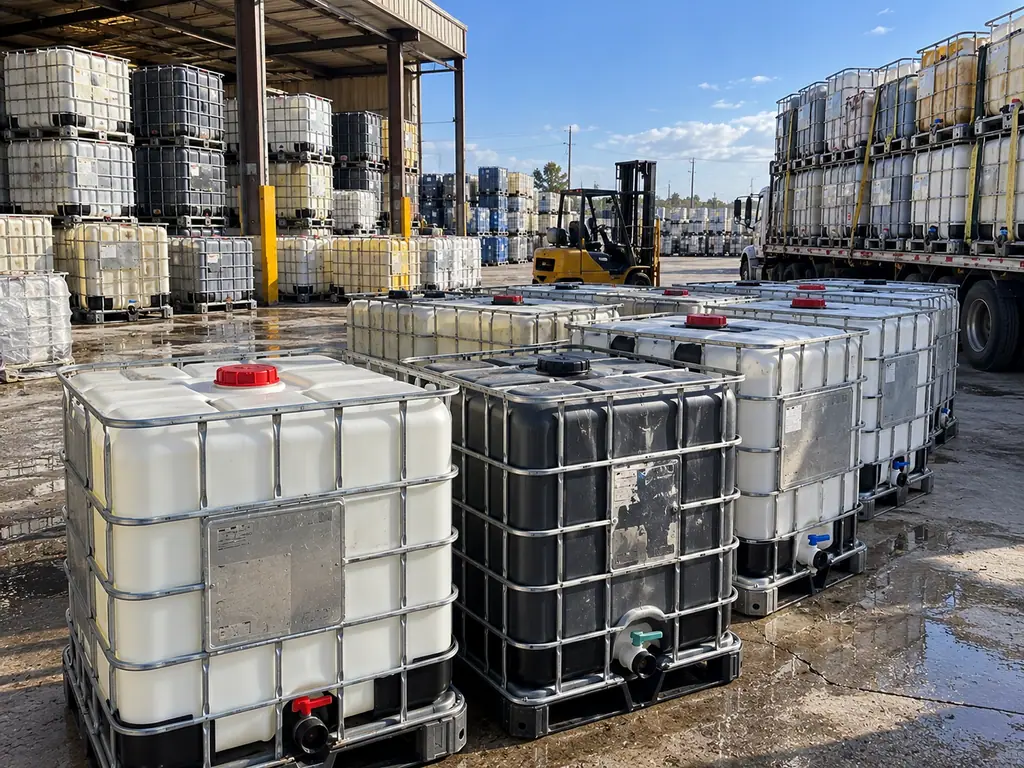
Cold storage looks like an easy environment for a plastic tote — no UV, no heat, no weather. It has its own failure modes, and they catch out customers moving from ambient storage.
Condensation is the whole story
A tote moved from a 38°F cold room to a 70°F packing area sweats immediately and comprehensively. That water runs down the bottle, pools on the pallet deck and sits in the cage channels.
Consequences, in order of how often we see them: label failure, rust at the feet and lower tubes, mould on wooden pallets, and slip hazards around the unit.
Pallet choice matters more here than anywhere
| Base | In cold storage | Verdict |
|---|---|---|
| Plastic | Washes down, no absorption, no rust | Best choice |
| Composite | Plastic deck fine; steel frame will rust at scuffs | Acceptable |
| Steel | Rusts at every coating break; stains floors | Workable with maintenance |
| Wooden | Absorbs water, grows mould, fails audits | Avoid entirely |
Food customers in cold chain should specify plastic bases at order time. It costs a little more and it removes the single most common audit finding we hear about.
Thermal cycling and the bottle
Repeated warm-cold cycles make a sealed bottle breathe: it draws in air as it cools and pushes it out as it warms. Over hundreds of cycles that movement can deform the walls and, more importantly, it moves ambient air across the headspace of your product.
A gasketed vent plug with a filter element solves the deformation. For product protection, the answer is usually to keep the tote in one thermal zone rather than shuttling it.
Viscosity, which is a people problem
Many food products that pour at ambient will not pour at 38°F. Honey, certain syrups, vegetable oils, some concentrates. The tote is fine; the dispensing plan is not.
Options in order of cost: move the unit to a warm room the night before, fit an insulation jacket and a band heater, or specify a conical base so that whatever does flow, flows completely. Most customers end up with the first and are happy.
Cleaning between products
Cold rooms encourage people to leave a tote in service longer between washes because nothing visibly degrades. Biology disagrees. Our guidance to food customers is to wash on a schedule, not on appearance, and to keep units dedicated to a single product wherever the operation allows.