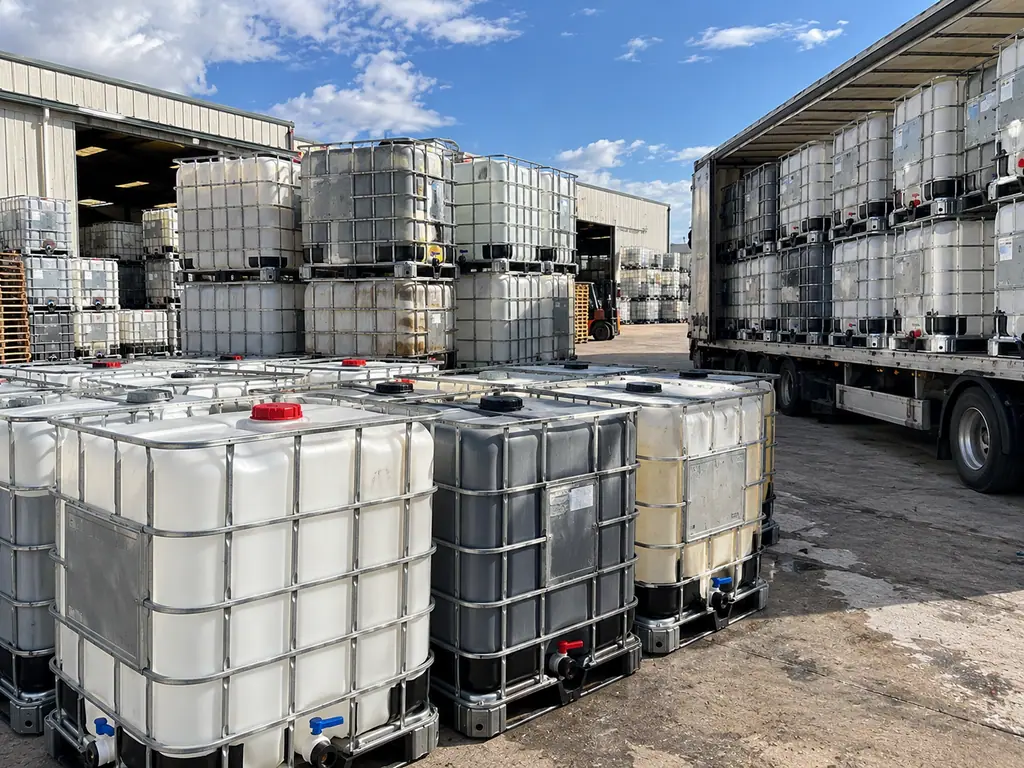
Anyone running a returnable tote programme eventually asks the same question: what loss rate is normal? Nobody publishes it, so here is ours and what we see at customers.
The rates we observe
| Programme type | Annual loss | Dominant cause |
|---|---|---|
| Managed pool, defined lane | 1–2% | Damage beyond repair |
| Customer-owned, disciplined yard | 3–5% | Units repurposed on site |
| Customer-owned, multi-site | 8–12% | Nobody owns the return |
| Deposit-free consumer-facing | 20%+ | They are simply useful objects |
Where they actually go
Very little of it is theft in the dramatic sense. In order of volume:
- Repurposed on site. Somebody at the receiving end cut the top off to make a parts washer, a planter or a wash station. This is the single largest category and it is usually well-intentioned.
- Still full. The tote has not been returned because it has not been emptied, and nobody is counting the months.
- Buried in a yard. Behind a building, under a tarp, forgotten in a corner during a reorganisation.
- Damaged and quietly disposed of, because explaining the damage felt harder than losing the unit.
- Actually stolen, usually from unsecured sites, usually for scrap or for resale to someone like us.
The four controls that work
- A number on the cage. Not a sticker — a stencil. Anonymous assets disappear; numbered ones get returned.
- A named owner at the receiving end. 'The warehouse' does not return totes. A person does.
- A scheduled retrieval, not an on-request one. If collection happens on a route, empties accumulate for days rather than months.
- A deposit or a stated replacement value on the paperwork. It does not need to be punitive; it needs to exist.
What a tolerance actually means
In our pooling contracts, shrinkage up to an agreed tolerance — typically two percent a year — is our cost. Above it, we invoice at a replacement rate that is written into the contract at signature rather than invented after the fact.
That structure exists because loss is predictable in aggregate and unpredictable per customer. Pricing it up front is the only arrangement that survives the first bad year.