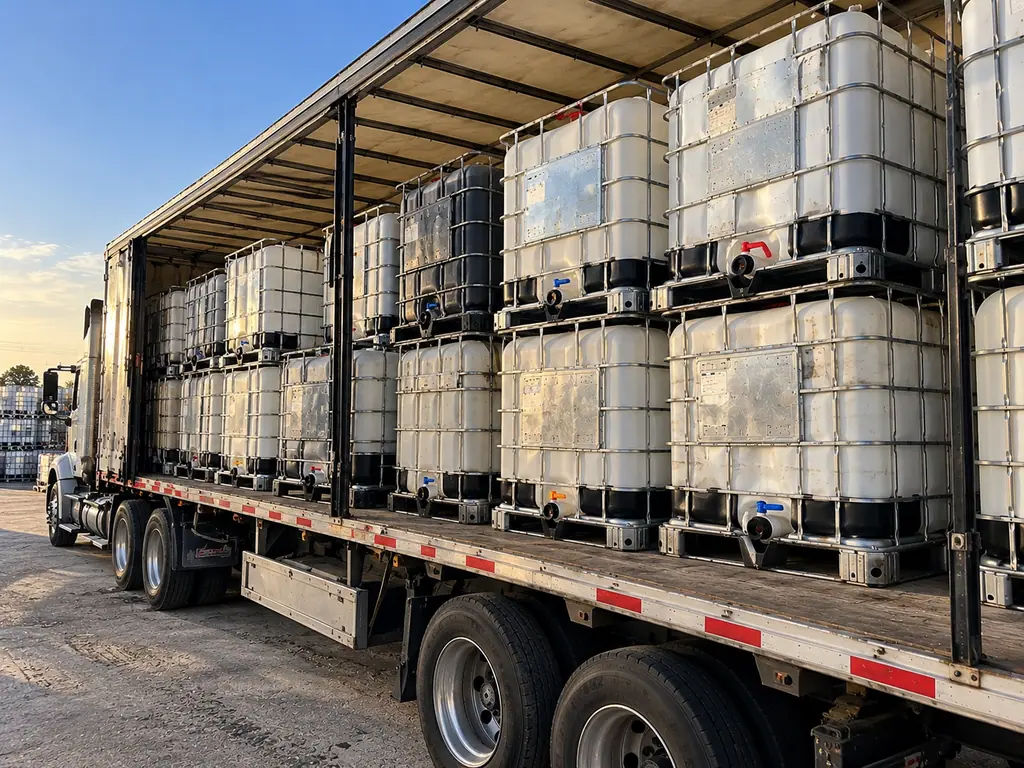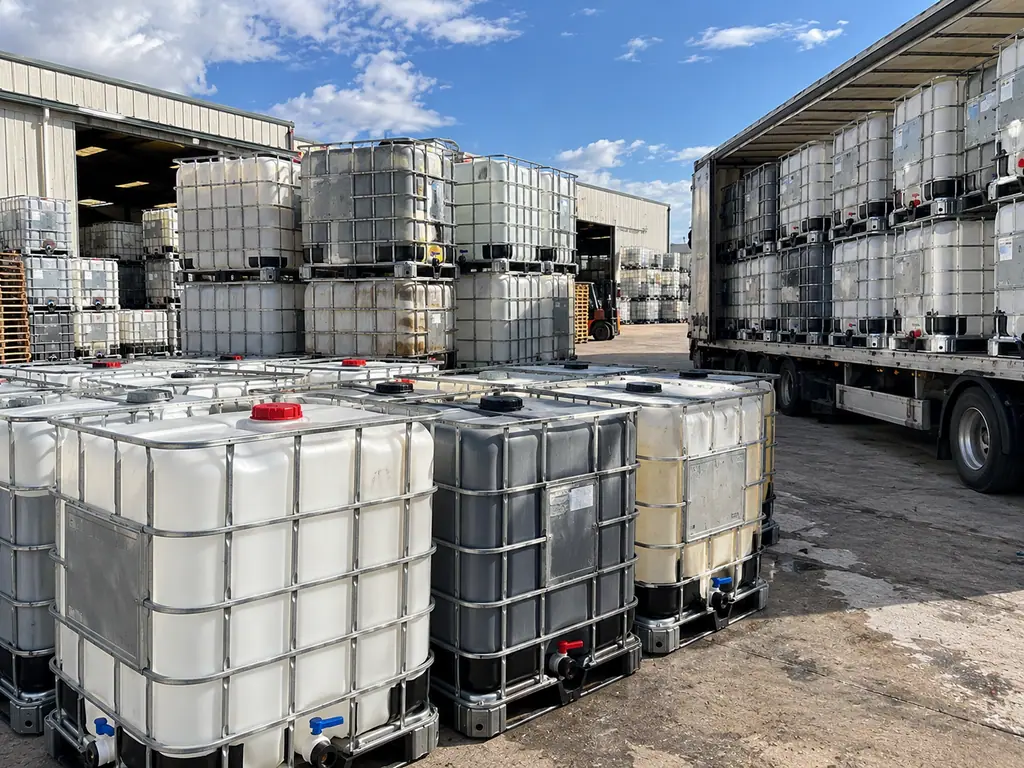
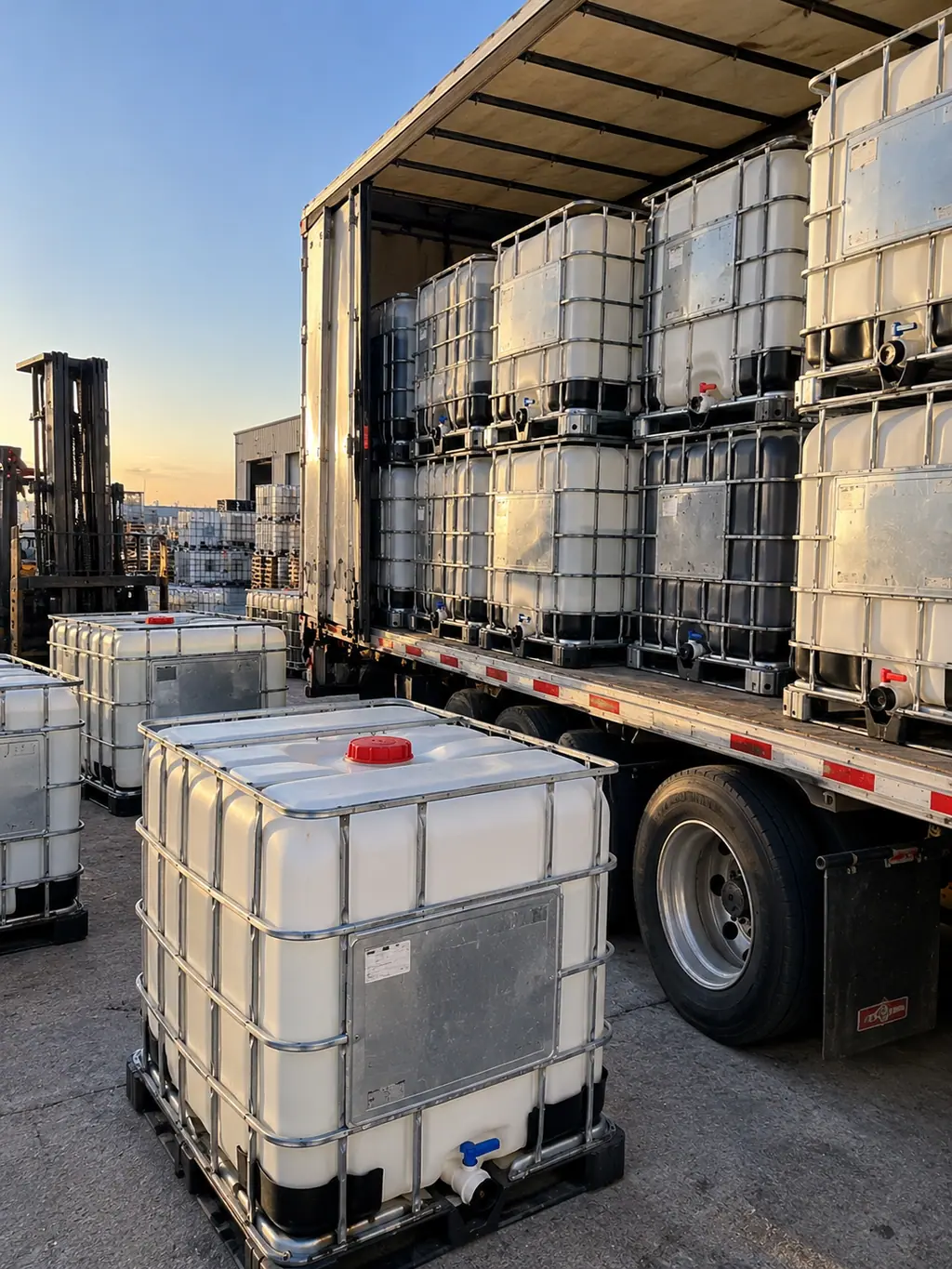
A truck driving empty is burning fuel to move air. In a business built on not wasting material, it would be strange to be relaxed about wasting diesel, so routing gets the same attention as grading.
The structural advantage of a reuse yard
We have an unusual freight profile: material flows both directions. Reconditioned totes go out to customers; empty totes come back from sellers. Most distributors only have the outbound leg.
That means a truck delivering twenty washed totes to a blender in Toledo can collect thirty empties from a distributor eight miles away and come home loaded. The second leg costs the detour, not the lane.
How the schedule is actually built
- Outbound orders are grouped by corridor, not by order date. Three deliveries along I-75 go together even if one was ordered a week later.
- Open buyback quotes are indexed by ZIP and matched against those corridors.
- Any pickup within about thirty miles of a planned lane gets offered a backhaul slot, usually at better pricing because the lane is already paid for.
- Remaining pickups are batched into dedicated runs when enough accumulate in one direction.
- Anything urgent breaks the pattern, and we price that honestly rather than pretending it is free.
The numbers
| Metric | Value |
|---|---|
| Pickups riding an existing lane | 68% |
| Average detour for a backhauled pickup | 22 miles |
| Typical dedicated-run threshold | 20+ units |
| Core radius served by our own trucks | 300 miles |
| Share of total miles run loaded | 81% |
Why we exclude freight from our carbon claims
We say a reused tote avoids roughly 112 kg of CO₂e, and we deduct an allowance for collection. What we do not do is bury your delivery freight inside that number, because your lane is yours and it varies by a factor of ten between a local drop and a cross-country haul.
A reuse yard shipping totes two thousand miles to save embodied carbon is doing arithmetic it does not want you to check. We would rather tell you when a lane stops making sense, which happens more often than you would expect.
The limit of backhauling
It only works where flows are roughly balanced. In regions where we sell a lot and buy little, the return leg runs empty regardless of planning, and the honest answer is that those lanes cost more — in money and in fuel. We quote them as what they are.